Wheel Loader Compliance Guide for Importers: Standards, Certification, and Regional Acceptance
Compliance is the first specification an importer should test — not the last. A wheel loader that matches the duty cycle but arrives without a coherent document trail is a machine that cannot be registered, plated, insured or resold in the target market. This guide sets out a region-by-region method for building a compliance file that survives customs, registration authorities and dealer due diligence, using the EVERUN wheel loader and telehandler range as a working example of how model names, engine sources and documentation must line up.
The article is intentionally process-focused. It does not argue that any particular machine is compliant in any particular country; that judgment belongs to the importer, the supplier's documentation and, where required, the local conformity-assessment body. What it does provide is a repeatable checklist structure that tells an importer exactly which documents to request, in what order, and what a passing answer looks like before money changes hands.
Problem Definition: Why Spec-Sheet Compliance Fails at the Border
Most sourcing conversations begin with lifting height, bucket size or engine power. Compliance usually appears much later, in a single line of an email: “certificates available.” That single line is where importers lose control of a purchase. A certificate is not a compliance file, and a compliance file is not automatically a compliance file for your market, your model and your shipment.
Three failure patterns account for most of the problems importers encounter after the container has sailed.
Failure pattern 1: Model-to-document drift
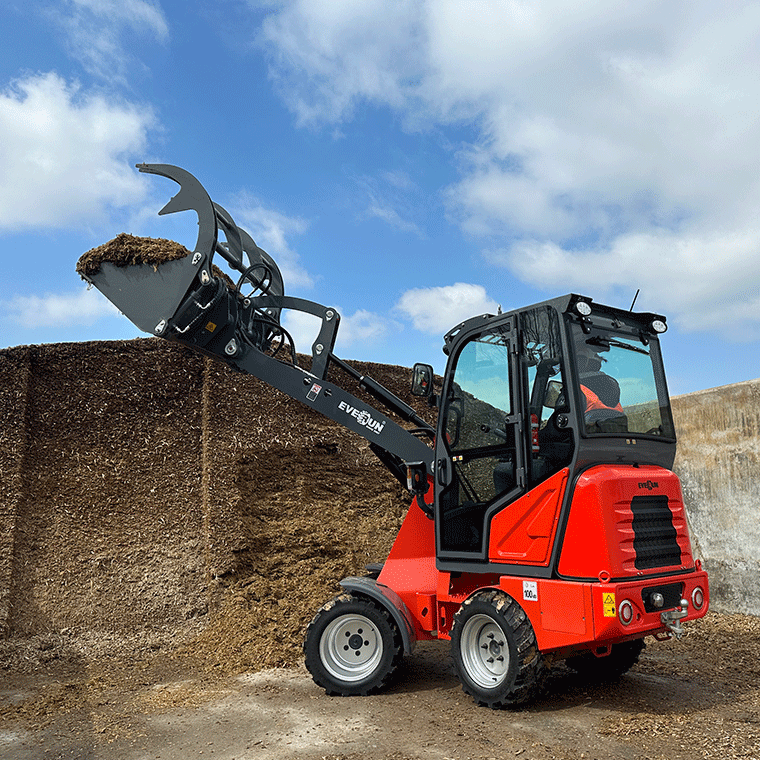
The document set covers a product family; the invoice covers a specific model code. A supplier may hold a valid technical document for one configuration and ship a different configuration of the same visual family. Where the paperwork references a family name rather than the exact model designation stamped on the machine, the importer inherits an unanswerable question at the port: which document actually applies to this unit? This risk grows with wide portfolios. EVERUN's public portfolio, for example, spans articulated and compact wheel loaders, telescopic wheel loaders, electric wheel loaders, excavators and attachments, and the manufacturer describes its wheel loader range as covering 0.4 to 6 tons — a breadth that makes model-level document matching essential rather than optional.
Failure pattern 2: Standard-to-market mismatch
A machine built and accepted in one regulatory environment may not satisfy the entry conditions of another. Emissions frameworks, machinery safety requirements and electrical requirements are jurisdiction-specific and are revised over time. An importer who accepts a generic “CE” reference without asking which directive, which standard and which version is being declared has effectively accepted an unverified claim.
Failure pattern 3: Evidence that cannot be lodged
Documents that satisfy a supplier's marketing department often fail the practical test: can a customs broker, registration office or insurer actually accept them? Poor scans, missing signatures, untranslated pages, expired validity and unrelated model codes all cause the same outcome — the machine is physically present but administratively unusable.
Industry Background: Emission Rules, Electrification and Documented Duty of Care
Two structural changes have raised the documentary bar for wheel loader importers.
The first is emissions regulation. EU Stage V, formally Regulation (EU) 2016/1628, sets non-road emission requirements that a machine placed on the EU market must be documented against. In North America, US EPA Tier 4F performs a comparable function. These are not marketing labels; they are regulatory frameworks with defined scope, defined engine categories and defined evidence. Engine provenance therefore matters. EVERUN states that its models comply with EU Stage V (Regulation (EU) 2016/1628) and US EPA Tier 4F standards and that the engines are sourced from Perkins, Kubota and Yanmar — a claim an importer should be able to trace from the machine plate, to the engine plate, to the engine manufacturer's documentation and finally to the supplier's declaration.
The second change is electrification. Electric loaders such as the ERW1525E, ER08E, EREL05 and EREL1200 add a second documentation stack on top of the conventional machine file: battery system information, charger compatibility, electrical safety and electromagnetic compatibility evidence, plus the service and training implications of a high-voltage or lithium-based system. Diesel documentation does not transfer. An importer transitioning part of a fleet to electric drive should expect to build a parallel file, not append a page to the existing one.
Behind both changes sits a commercial reality: distributors increasingly carry the reputational and legal weight of what they sell. Authorities ask the importer, not the factory, to produce the file. Building that file before shipment is cheaper than defending its absence afterwards.
Detailed Solution: The Six-Layer Compliance Dossier
A workable compliance file for a wheel loader order has six layers. Each layer answers a different question, and each can be requested as a discrete package rather than as a vague request for “all certificates.” Structuring the request this way also makes supplier responses comparable: a supplier who can answer layers one to four but not five and six is telling you something useful about its export readiness.
Layer 1 — Entity and facility documents
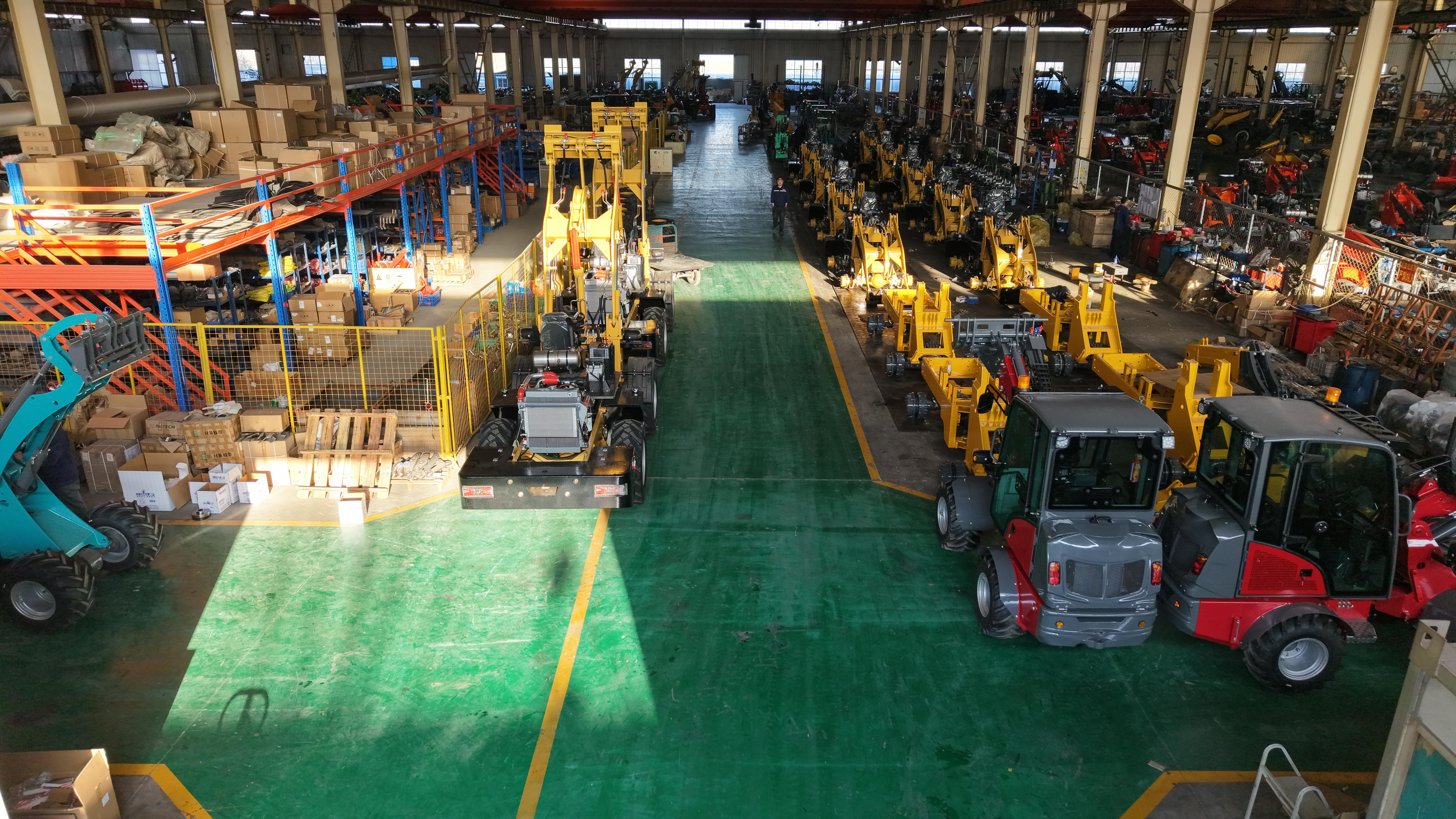
Before product documents, establish who is shipping. Request the legal entity name, business registration, factory address and export authorization. This matters because a trading intermediary and a manufacturer produce different documentary trails. Qingdao Everun Machinery Co., Ltd. describes three manufacturing factories and two foreign joint ventures, an 80,000 m² manufacturing facility and an annual production capacity of 5,000 units — statements an importer should hold in writing alongside the registration evidence that supports them.
Layer 2 — Product identity and model register
Build a model register that lists every model code on the purchase order, each one mapped to the exact document that covers it. This is where broad catalogues create confusion. A register that names ER406, ER408, ER412, ER416, ER420T, ER425T, ER11HT, ER1000, ER1220, ER1500F, ER2500F, ER2500T, ER3500, ERW1525E, ERW1230T, ERW2640T, ER1200T, EREL05, EREL1200, ERT1500, ERT1845 and ER3070 individually is more useful than a register that says “wheel loaders and telehandlers.” Each row should carry the marketing designation, the internal factory designation if different, and the attachment configuration.
Layer 3 — Emissions and engine documentation
For diesel models, request the engine manufacturer documentation, the emission-stage statement and the supplier declaration that ties them to the specific model. Confirm that the engine brand stated in the document matches the engine physically installed — Perkins, Kubota and Yanmar engines all appear within the EVERUN range, so “engine brand as documented” must be an explicit field, not an assumption.
Layer 4 — Machinery safety and conformity evidence
Request the declaration of conformity, the technical file summary, the standards list referenced by that declaration and the marking solution applied to the machine. Ask which version of each standard is cited. A declaration that names no version, or that names a superseded version, is a finding worth raising before the order is confirmed rather than after arrival.
Layer 5 — Electric and battery-specific documentation
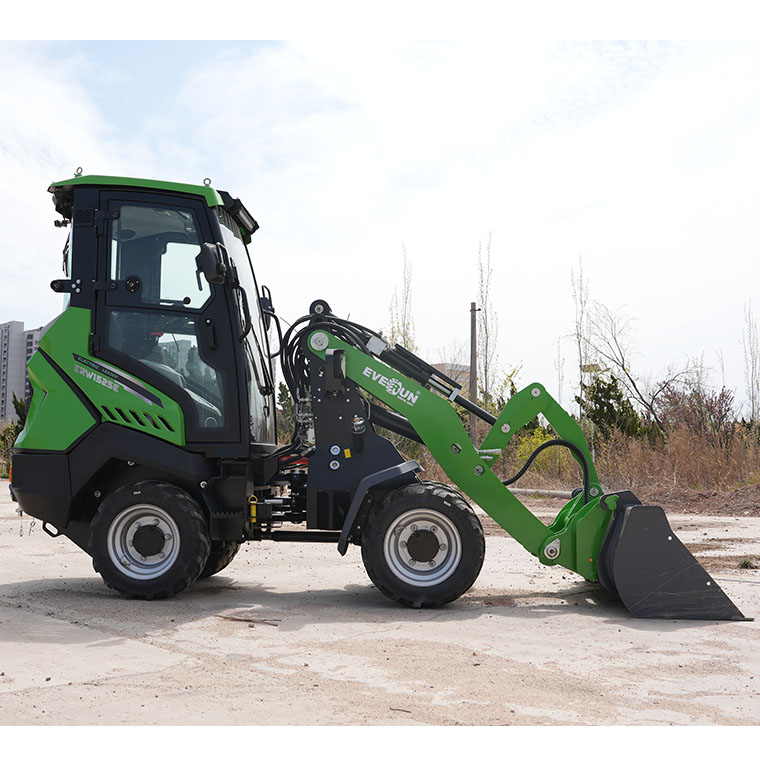
For the electric models in the range, the file needs battery system documentation, charger specification and compatibility, electrical safety evidence, EMC evidence and a written statement of the service and spare-parts implications. Battery technology, working hours and charging arrangements vary across models, so this layer must be completed model by model rather than by reference to “the electric range.”
Layer 6 — Commercial, service and lifecycle documents
Compliance does not end at the border. Layer six covers warranty terms, spare-parts commitments, service documentation and language requirements for operator manuals in the destination market. An operator manual in the wrong language is a compliance defect in several jurisdictions, and it is one of the most common omissions in a first shipment.
Step-by-Step Breakdown: Building the Checklist in the Right Order
The sequence matters as much as the content. Importers who request certificates before defining the acceptance route end up with a folder of documents that answers questions nobody asked. The eight steps below move from market definition to a living file.
Step 1 — Define the market and the acceptance route
Identify the destination country, the intended use, whether the machine will operate on public roads, and which body will register or accept it. Each of these changes the document set. Write the answer down before contacting any supplier; it becomes the specification against which every document is judged.
Step 2 — Build the model register against the supplier's real catalogue
List the models you actually intend to import, including attachments. Confirm each designation against the supplier's published model list rather than against a quotation shorthand. Register ER2500T and ER2500F as separate rows; they are different designations and may not share documentation.
Step 3 — Issue a documented information request, not a general enquiry
Send the six-layer structure as a numbered request with a response column. A supplier that answers item by item is easier to qualify than one that replies with a brochure. Ask explicitly for document versions, issue dates and the exact model codes covered.
Step 4 — Verify document-to-machine matching before the sample ships
Cross-check the model code in the document, the model code on the order, the serial number on the machine and the engine plate. This is the single highest-value check in the process. It converts a family-level claim into a unit-level fact, and it is far easier to fix at the factory than at the port.
Step 5 — Interpret the standards, do not just collect them
For each cited standard, record what it covers and what it does not. Emissions documentation addresses emissions; it does not address lifting stability, braking or electrical safety. A file that contains only emissions evidence is an incomplete file in most markets, and an importer who presents it as complete invites a second, more expensive review.
Step 6 — Agree a written pre-shipment acceptance protocol
Define the inspection items, the photographs required, the documents to be packed with the machine and the person responsible for sign-off. Include identification checks, document completeness checks and a language check on the manual. The protocol should be agreed before production, not after.
Step 7 — Plan arrival, registration and first-service documentation
Confirm who lodges the file on arrival, what the broker requires and how long the registration step takes locally. Then confirm how service records will be kept, because a documented service history is itself part of the compliance and resale value of the machine.
Step 8 — Keep the file alive through change control
Standards are revised, models are updated and suppliers change component sources. Assign an owner and a review interval to the file. A compliance dossier that is correct on the day of import and never reviewed becomes a liability by the second shipment.
Use Cases: How the Checklist Adapts to Four Import Profiles
Use case 1 — EU distributor importing compact diesel loaders
The file centres on EU Stage V (Regulation (EU) 2016/1628) documentation, the declaration of conformity, the technical file and the marking solution. The distributor's acceptance criteria should include engine-brand verification and a check that the declared stage matches the engine actually installed. Models such as the ER408, ER412 and ER420T, which sit in the compact and small categories, are typically imported in multi-unit orders where unit-level matching is the main risk.
Use case 2 — North American dealer working to EPA Tier 4F
The structure is the same but the referenced framework differs. The dealer should confirm that the emission statement, the engine documentation and the machine serial all align, and should separately verify the market-specific labelling and manual requirements that apply in its own jurisdiction.
Use case 3 — Municipal or indoor fleet buyer switching to electric
Electric models including the ERW1525E, ER08E, EREL05 and EREL1200 require the additional layer covering battery system, charger and electrical safety. Because these machines are often deployed indoors or in noise-sensitive areas, the buyer should also obtain written confirmation of the operating envelope claimed for the model rather than inferring it from the model name.
Use case 4 — Mixed-fleet importer adding telescopic units
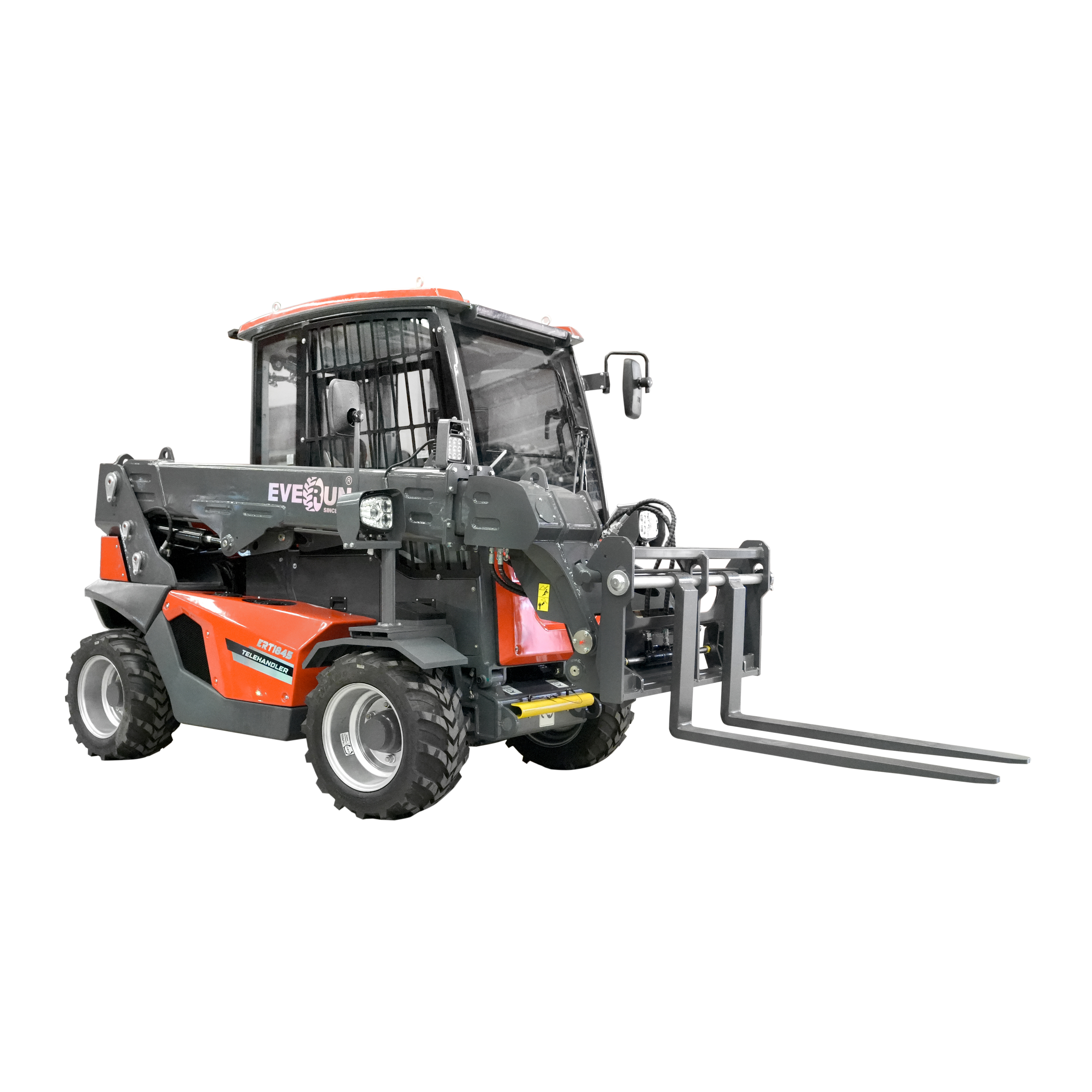
Adding telescopic loaders such as the ERW1230T, ERW2640T, ER1200T, ER2500T, ER3500 or the ERT1500 and ERT1845 telehandlers introduces lifting-related documentation and attachment configuration into the file. The register must record the attachment set shipped, because the compliance position can change with the equipment fitted.
Regional Acceptance Matrix: Verified Scope Only
The table below records only what the available verified material supports. Where a region is not covered by that material, the correct action is to obtain local confirmation — not to extrapolate from another market.
| Market | Emission framework referenced in EVERUN documentation | Engine sourcing basis | What the importer must still obtain |
|---|---|---|---|
| European Union | EU Stage V — Regulation (EU) 2016/1628 | Perkins, Kubota and Yanmar engines used within the EVERUN range | Declaration of conformity for the exact model, technical file summary, standards list with versions, marking evidence, destination-language manual |
| United States | US EPA Tier 4F | Perkins, Kubota and Yanmar engines used within the EVERUN range | Unit-level emission statement, engine documentation, market labelling and manual requirements confirmed with the local dealer or authority |
| Markets outside the verified scope | Not covered by the available verified material | Confirm per order | Local market-entry requirements obtained directly from the importing authority or a local conformity body before the order is placed |
Purchase Acceptance Criteria: What Passes and What Does Not
Acceptance criteria turn a document review into a decision. Each criterion below should be answered with a pass, a conditional pass or a fail, and a fail should stop the shipment rather than accompany it.
| Criterion | Pass condition | Fail signal |
|---|---|---|
| Model coverage | Document names the exact model code on the order | Document references only a family or a different designation |
| Engine traceability | Engine brand and plate information match the documents | Engine brand differs from the declaration, or the plate cannot be read |
| Standard versioning | Each cited standard carries an identifiable version | Standards cited without version, or a superseded version |
| Document completeness | All six dossier layers answered in writing | Layers five and six missing or deferred to after shipment |
| Unit-level evidence | Serial number linked to the document set before dispatch | Serial number supplied only after arrival |
| Manual and labelling | Destination-language manual packed with the machine | Manual supplied later, or in an unintended language |
Frequently Asked Questions
1. Which emission standards do EVERUN wheel loaders reference for EU and US delivery?
EVERUN states that its models comply with EU Stage V, formally Regulation (EU) 2016/1628, and with US EPA Tier 4F, using engines sourced from Perkins, Kubota and Yanmar. For an importer, that statement is the starting point rather than the end of the check: the declaration, the engine documentation and the machine plate must all refer to the same unit, and the applicable standard version must be identifiable in the file.
2. How can an importer confirm that a certificate applies to the machine actually shipped?
Match four identifiers before dispatch: the model designation on the purchase order, the model designation named in the document, the machine serial number, and the engine plate information. Where any of the four does not reconcile, request a corrected document set. This unit-level matching is what distinguishes a compliance file from a certificate collection, and it is significantly cheaper to resolve at the factory than at the port of entry.
3. What compliance-related costs should be budgeted beyond the machine price?
Budget for four categories: document preparation and translation, marking and labelling for the destination market, any local conformity or registration fees, and the internal time required to review and lodge the file. These cost categories exist independently of the machine type, and they apply equally to diesel and electric models — with electric models typically adding charger, battery-system and electrical-safety documentation to the scope. The precise amounts are market-specific and should be quoted locally rather than estimated from a supplier's general price list.
4. Can compliance be validated through a sample unit before a bulk order?
Yes, and it is the recommended sequence for a first order. Request a sample unit together with its complete six-layer document set, then run the acceptance criteria against that single machine before confirming volume. A sample validated document-by-document is a more reliable signal than any quantity of catalogue claims, and it establishes the inspection protocol that subsequent shipments will follow. Importers ready to take that step can request a sample and quotation through EVERUN's contact channel.
5. How long does it take to assemble a complete compliance file?
The timeline is driven by how early the process starts, not by the machine. Importers who define the acceptance route and issue the six-layer information request before production typically spend most of the elapsed time on document review and translation rather than on waiting for the supplier. Starting after the machine is built compresses the same work into a shorter window and is the most common cause of delay at the port. For a specific model and destination, confirm the sequence and the required documents directly with the supplier before fixing the shipment date.
Conclusion: The Document File Is the Import Decision
An importer's real product is not the wheel loader on the container floor; it is the machine plus the evidence that it may legally operate where it is going. Region-by-region compliance work is unglamorous, but it is the only reliable way to avoid the position where a machine is physically delivered and administratively stranded. Build the six-layer dossier, run the acceptance criteria against a sample, match identifiers to the exact unit, and keep the file under review through change control.
The EVERUN range — from compact and small wheel loaders such as the ER406, ER408, ER412, ER416, ER420T and ER425T, through telescopic models including the ERW1230T, ERW2640T, ER1200T, ER2500T, ER3500 and the ERT1500, ERT1845 and ER3070 telehandlers, to the electric ERW1525E, ER08E, EREL05 and EREL1200 — can be documented model by model against that structure. Qingdao Everun Machinery Co., Ltd. operates an 80,000 m² manufacturing facility with an annual production capacity of 5,000 units across three manufacturing factories and two foreign joint ventures, and states that its models comply with EU Stage V (Regulation (EU) 2016/1628) and US EPA Tier 4F using Perkins, Kubota and Yanmar engines. Each of those statements is a claim to be verified in writing, which is exactly what the dossier is for.
Next Step: Build the File Before the Order
Importers and distributors can request the EVERUN product catalogue, a model-level document package, or a sample unit quotation for a specific market. Send the destination country, the intended models and the acceptance route, and the response can be structured against the six layers described in this guide.
Website: www.everun.com | Email: info@everun.com | Tel / WhatsApp: +86 18661725881
Download the catalogue: EVERUN product catalogue (PDF)
Have Questions or Need More Details?
Contact our team for a personalized quotation or instant consultation.
Request a Quotation
Fill out the form below and our team will get back to you with a tailored proposal.
WhatsApp Direct Chat
Prefer to chat in real-time? Message us on WhatsApp for instant assistance & quick answers.
- Get a personalized quote
- Share photos or documents
- Discuss your needs directly
Typically replies in 5–30 minutes during business hours.