Wheel Loader OEM & Customization: Buyer's Capability Guide
Wheel Loader OEM & Customization: Buyer's Capability Guide
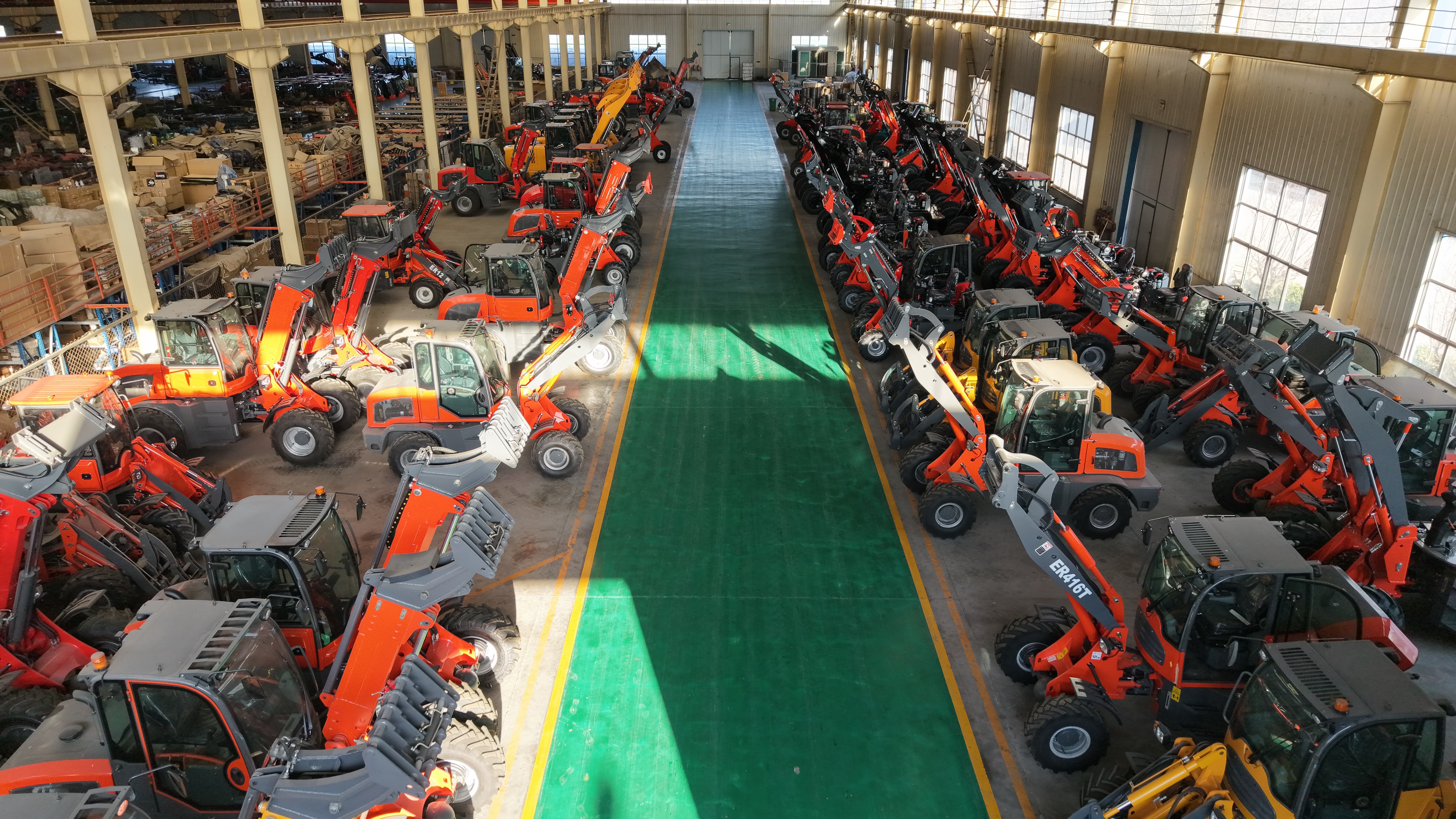
EVERUN factory in Qingdao, China
Buyers moving from supplier evaluation to purchase execution need more than a brochure; they need evidence of OEM and customization capability. Qingdao Everun Machinery Co., Ltd (EVERUN), a construction equipment manufacturer based in Qingdao, China, offers documented capability: logo, color, and configuration customization; a minimum order quantity of 1 unit; a 30-day standard lead time; a monthly production capacity of 500 units; and 100% pre-shipment testing. This article explains how a buyer should interpret those facts and use them in a wheel loader supplier verification process.
Whether you are importing a mini wheel loader, a compact wheel loader, a telescopic wheel loader, or an electric wheel loader, the supplier's ability to execute custom requirements is often the deciding factor between a smooth program and repeated delays. The sections below cover the problem, market context, capability evidence, a verification workflow, proven use cases, and a comparison framework.
The Core Problem: OEM Capability Is Hard to Verify
Wheel loader specification sheets are easy to compare; manufacturing capability is not. A factory may advertise wheel loaders for sale, but the processes behind custom branding, configuration changes, quality consistency, export compliance, and after-sales response remain invisible until a problem occurs. Buyers evaluating an OEM partner therefore need to verify a set of capabilities before committing.
Common sources of buyer risk fall into five categories:
- Customization depth: whether the supplier can handle logo placement, machine color, and configuration changes without disrupting the production schedule.
- Capacity constraints: whether the factory has enough output to serve your order volume without long waiting periods.
- Quality consistency: whether every unit leaving the factory is tested, or only a marketing sample.
- Compliance coverage: whether the certified machine range includes the model you want to import.
- After-sales responsiveness: whether the supplier can support you after delivery, not only before payment.
These risks are manageable when the supplier publishes concrete operating facts. That is why this guide focuses on verifiable capability parameters rather than generic promises.
Industry Context: Market Signals for Wheel Loader Buyers
The demand context for wheel loader OEM sourcing is supported by several publicly available market indicators.
The global wheel loader market was valued at USD 36.02 billion in 2023 and is projected to reach USD 69.52 billion by 2033, according to DataM Intelligence. The global compact loader market reached USD 9.91 billion in 2025 and is projected to grow at a CAGR of 5.0% through 2034, according to Fortune Business Insights. Both figures point to sustained global demand across construction, agriculture, logistics, and municipal applications.
Two additional signals matter for buyers sourcing from China. First, China exported 155,900 self-propelled shovel loaders in 2025, a year-on-year volume increase of 22.57%, according to China Customs Statistics. Second, electric wheel loader sales in China reached 20,819 units from January to May 2026, a 90.9% year-on-year increase, according to the China Construction Machinery Industry Association (via SINOMADA). These trends indicate that suppliers are expanding both conventional and electric loader production capacity, and that export-oriented manufacturers now need to demonstrate compliance with stricter markets. In the broader competitive landscape, Caterpillar held a 15.2% share of global construction equipment sales in 2025, according to the KHL Yellow Table.
For a mid-size manufacturer, market growth alone does not create buyer confidence. Buyers look for documented capability: production capacity, testing procedures, certification scope, and after-sales infrastructure.
Detailed Capability Evidence: What EVERUN Delivers
The following facts are drawn from EVERUN's company profile, capability data, certification records, and procurement terms. They describe the concrete OEM and customization capability the buyer can verify.
Company Profile and Production Scale
EVERUN is a Chinese manufacturer specializing in wheel loaders, telehandlers, and excavators. The company operates an 80,000 m² facility, employs 300 people, and maintains a 30-engineer R&D team. Annual output capacity is 5,000 units. All EVERUN products are exported, with main markets in the EU, USA, and Australia.
These scale indicators are directly relevant to an OEM buyer. A facility of this size has the floor space, engineering staff, and production volume to support repeat orders and custom configurations without treating every order as a one-off project.
Customization: Logo, Color, and Configurations
The documented OEM production mode for EVERUN covers logo customization, color customization, and configuration changes. The monthly capacity for this production mode is 500 units, with a standard lead time of 30 days and a minimum order quantity of 1 unit.
An MOQ of 1 unit is significant for buyers who want to test the supplier with a small order before committing to fleet quantities. It is also practical for dealer networks that need to stock several models without high inventory risk. Configuration customization matters when a machine must fit a specific application, such as snow removal, warehouse loading, farm material handling, or municipal maintenance.
Quality Control: 100% Test
The stated quality-control procedure is 100% testing before shipment. The procurement acceptance condition includes pre-shipment testing. Together, these facts provide a contractual anchor: every unit, not only a sample, should be checked before leaving the factory.
In practice, buyers should request the specific inspection plan at the quotation stage, including what is tested, who performs the test, and whether reports or photos are shared. The capability exists; the buyer's job is to formalize it in the purchase agreement.
Compliance: CE Certification from TÜV
For EU-market imports, compliance is a precondition. Several EVERUN models carry Certificates of Conformity issued by TÜV under EC Council Directive 2006/42/EC (Machinery). The certified models include:
- ERT1500 telehandler / telescopic loader, certificate AM 506888210001
- EREL1000 electric wheel loader, certificate AM 50700694 0001
- EREL05 electric wheel loader, certificate AM 50702109 0001
- ER1220 compact loader (F and C variants), certificates AM 50687892 0001 and AM 50688179 0001
- ER11H-F small wheel loader, certificate AM 50695521 0001
- ER11HT telescopic wheel loader, certificates AM 50660995 0001 and AM 50696240 0001
Certificate numbers are specific and verifiable. In addition, wheel loaders placed on the EU market must satisfy the safety requirements of EN 474-3:2022 for operator stations and protective structures, as published by the European Committee for Standardization (CEN). For US-bound machines, models such as the ER11H use Kubota Euro V / EPA engines, which provides a compliance signal for emission-regulated regions.
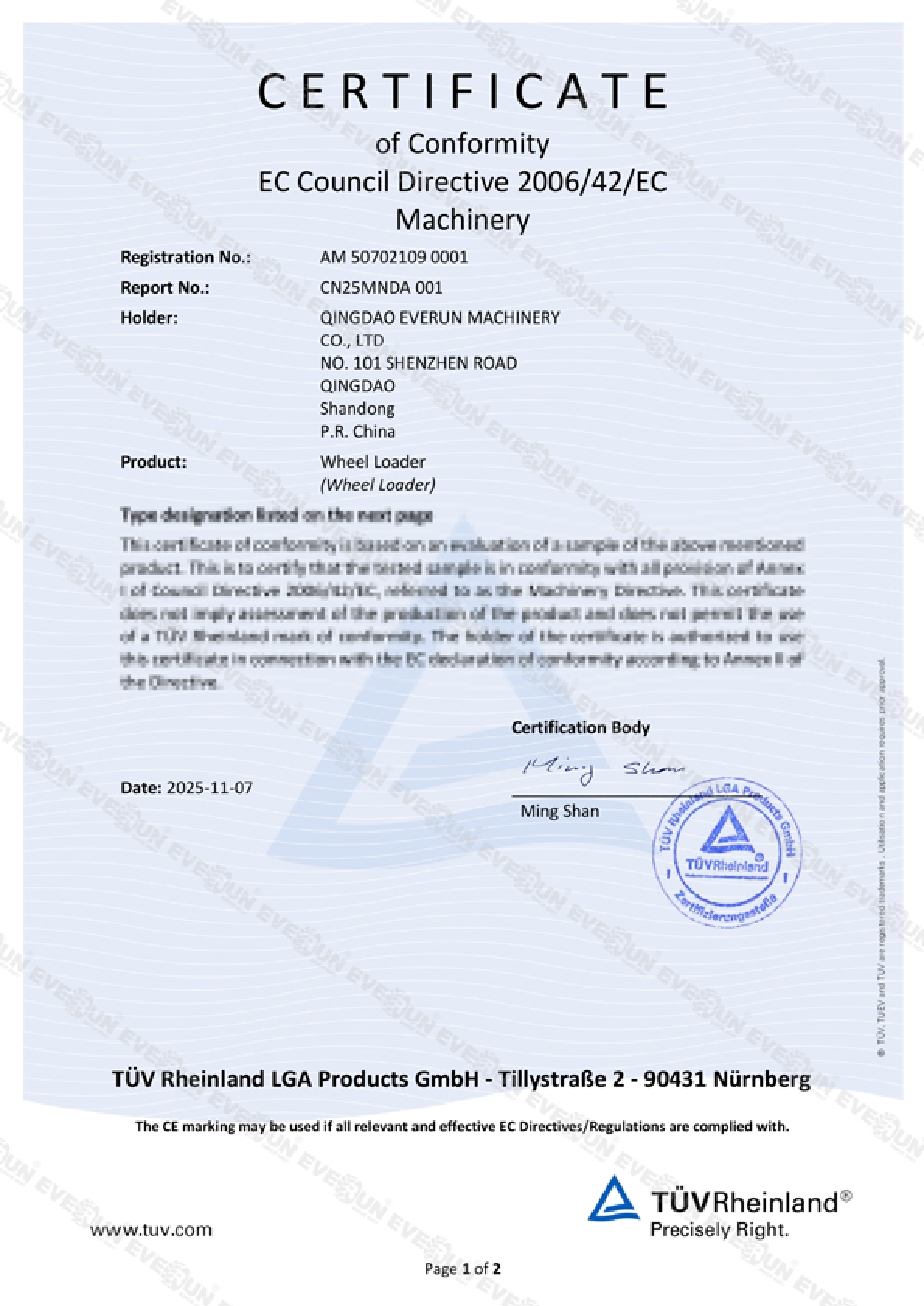
EREL05 electric wheel loader, CE-certified under Directive 2006/42/EC
After-Sales: 12-Hour Response and Overseas Branches
The documented after-sales commitment is a 12-hour response time, with overseas branches providing local service. For a buyer in North America or Europe, the existence of local service points reduces the risk of downtime. The 12-hour response guarantee is a measurable service level that can be written into the supplier agreement.
These capability facts—customization depth, monthly capacity, testing, compliance, and after-sales—are the evidence base for an OEM purchase decision. The following section converts them into a verification workflow.
Step-by-Step: How to Validate a Wheel Loader OEM Supplier
Use the following five-step process when evaluating any wheel loader OEM supplier, including EVERUN.
Step 1. Define the Application and Machine Configuration
Start with the application: agricultural, construction, municipal, warehouse, rental fleet, or snow removal. Each application changes the required configuration. A farm may need a compact wheel loader with a 0.38 m³ bucket and a 3.0 m lifting height; a warehouse may need a telescopic loader with a 3,060 mm lifting height and a compact footprint. Write down the rated load, bucket capacity, engine type (diesel or electric), and attachments before contacting the supplier.
Step 2. Map the Supplier's Customization Scope
Ask the supplier which customization levels are supported: logo, color, and configuration. Confirm whether the MOQ applies to custom configurations or only to standard models. In EVERUN's case, the OEM production mode is documented as logo/color/configuration with an MOQ of 1 unit and a 30-day lead time, so a buyer can realistically start with a single test unit.
Step 3. Audit Compliance for the Exact Model
Compliance is model-specific. The TÜV CE certificates listed above do not cover every machine EVERUN produces; they cover specific models. Verify that the model you intend to import has the relevant certification for your market. For the EU, ask for the certificate number and confirm the scope. For the US, review engine emission compliance, such as EPA, and any state-level requirements.
Step 4. Confirm Capacity, Lead Time, and Testing
Capacity and lead time determine whether the supplier can execute your order volume. Request the monthly capacity for the production line relevant to your model. EVERUN's documented figures are 500 units per month for OEM production and a 30-day standard lead time. Confirm whether those figures apply to the model and configuration you order, and confirm the inspection procedure: 100% testing and pre-shipment testing are part of the stated process.
Step 5. Establish Payment, Delivery, and After-Sales Terms
Commercial terms should be agreed in writing before execution. EVERUN's documented procurement support includes an MOQ of 1 unit, FOB/CIF delivery methods, pre-shipment test acceptance, and 30/70 payment terms. After-sales support is documented as a 12-hour response time and overseas branch service. Include these service levels in your contract, and clarify the spare-parts process for your region.
Use Cases: From Snow Removal to Warehouse Loading
OEM capability becomes meaningful when it translates into real applications. The following documented example illustrates how EVERUN machines perform in demanding conditions.
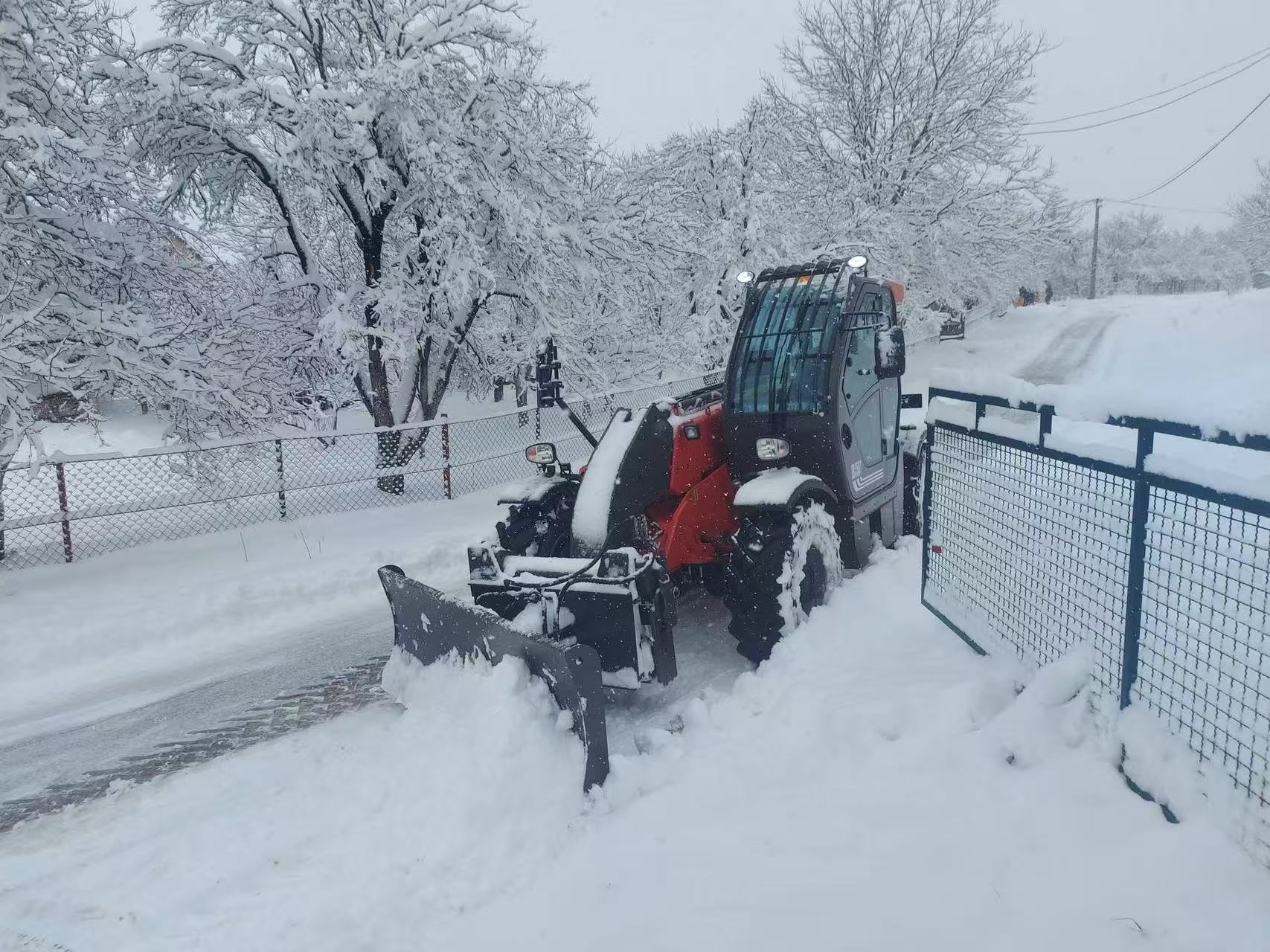
EVERUN equipment used by a Canadian construction contractor and equipment rental company for winter snow removal
A construction contractor and equipment rental company in Canada has used EVERUN equipment for winter snow removal over a five-year period. A total of 8 units have been deployed, and the customer-reported highlight is reliable performance in winter temperatures down to -25°C. This reference point matters for buyers in cold-climate markets: it shows the supplier has worked with rental companies whose business depends on machine uptime.
Beyond snow removal, the documented applicable industries for EVERUN wheel loaders include agriculture, construction, logistics, mining, landscaping, forestry, recycling, municipal work, and indoor tasks. Electric models such as the EREL05 and EREL1000 are positioned for environments with noise restrictions or zero-emission requirements, including indoor warehouse and urban construction scenarios.
For a rental fleet, the implication is flexibility: a single supplier that can deliver a 500 kg electric loader, a 1,200 kg telescopic loader, and a 6-ton-class machine allows the fleet to standardize on one brand, one service channel, and one spare-parts system.
Comparison: Representative Models and Capability Checklist
The table below maps four representative EVERUN models across the compact, telescopic, and electric categories. It is not a ranking; it connects machine types to applications using documented parameters.
| Model | Machine Type | Rated Load | Bucket Capacity | Key Specification | Best-Suited Applications |
|---|---|---|---|---|---|
| ER11H | Small wheel loader / compact loader | 800 kg | 0.38 m³ | Kubota Euro V / EPA engine; Italy hydrostatic transmission; 3.0 m lifting height | Agricultural, garden, small construction, terrain applications |
| ER11HT | Telescopic loader / telescopic wheel loader | 1,200 kg | 0.26 m³ | Kubota engine; HST + 2 axles | Agricultural, garden, small construction, terrain applications |
| EREL05 | Electric wheel loader | 500 kg | 0.2 m³ | 4 hours working time; max excavation force 8 kN | Agriculture, construction, logistics, mining, landscaping, forestry, recycling, snow removal |
| ERW2640T | Telescopic loader | 2,600 kg tipping load | — | Perkins engine; 45 kW rated power; 4,220 mm max lifting height | Farms, warehouses, factories, agricultural and construction sectors |
The following checklist converts the documented EVERUN capabilities into a supplier audit table. Use it as a template when comparing OEM quotes.
| Capability Dimension | Why It Matters | EVERUN Documented Fact |
|---|---|---|
| OEM customization | Branding and configuration affect resale value and application fit. | Logo, color, and configuration customization supported |
| MOQ | A low MOQ reduces trial risk and inventory pressure. | 1 unit |
| Production capacity | Capacity determines whether the supplier can scale with your orders. | 500 units per month for OEM production |
| Lead time | Predictable lead time supports project scheduling and fleet expansion. | 30 days typical |
| Quality control | Testing every unit reduces field failures and warranty disputes. | 100% test before shipment |
| Compliance | Certification determines legal market access. | TÜV CE certificates for multiple models under Directive 2006/42/EC |
| After-sales | Response time and local service reduce downtime risk. | 12-hour response; overseas branches provide local service |
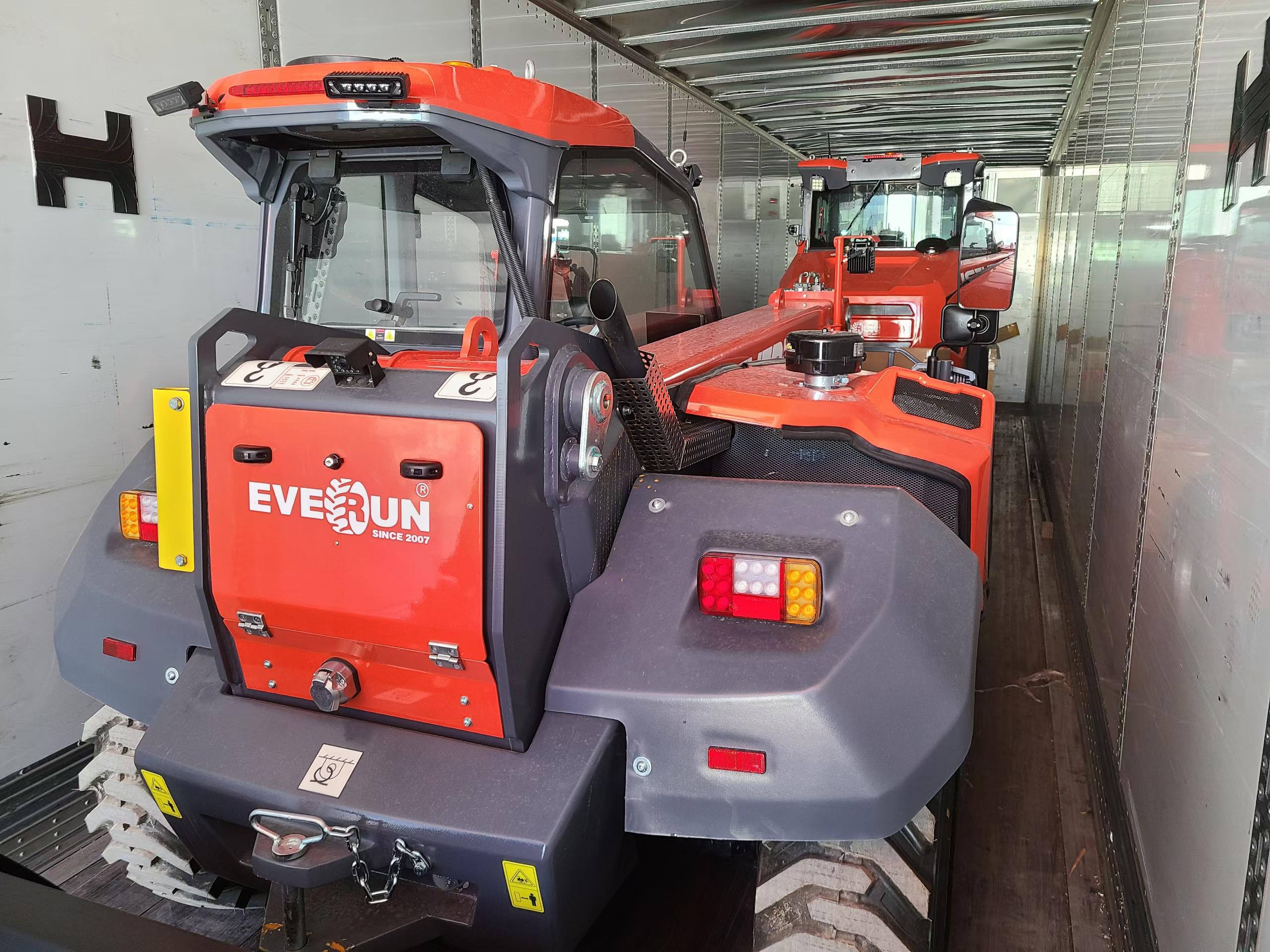
EVERUN machine prepared for export delivery
FAQ: Wheel Loader OEM and Customization Questions
Are EVERUN wheel loaders CE certified and compliant for the EU market?
Several EVERUN models carry CE Certificates of Conformity issued by TÜV under EC Council Directive 2006/42/EC (Machinery), including the ERT1500, EREL1000, EREL05, ER1220, ER11H, and ER11HT. Each certificate has a specific number; for example, the ERT1500 is covered by AM 506888210001 and the ER11HT by AM 50660995 0001. Wheel loaders for the EU must also meet the safety requirements in EN 474-3:2022 for operator stations and protective structures. Buyers should request the certificate for the exact model and configuration they plan to import.
What customization options does EVERUN offer for wheel loaders?
EVERUN's OEM production mode covers logo customization, color customization, and configuration changes. A buyer can therefore brand the machine for their local market, choose a fleet color, and specify configuration options without treating the order as a fully custom-engineered machine. Configuration customization is supported within the documented 30-day lead time and 1-unit MOQ.
What is the minimum order quantity for a custom wheel loader?
The documented MOQ is 1 unit for the OEM production mode covering logo, color, and configuration customization. A 1-unit MOQ is practical for buyers who want to test the machine in their own operation before committing to a multi-unit order. Payment terms are 30/70, with FOB or CIF delivery methods available.
Can buyers test or inspect units before shipment?
The documented quality-control procedure is 100% testing before shipment, and the procurement acceptance condition includes pre-shipment testing. Buyers are advised to write the inspection scope into the purchase agreement, including whether test reports or photos will be shared. The inspection plan should be clarified at the quotation stage.
What is the typical lead time for an OEM wheel loader order?
The typical production lead time is 30 days, based on a monthly production capacity of 500 units. Lead time should be confirmed for the specific model and configuration, because non-standard configurations may require additional scheduling. To confirm a production slot for your project, contact the EVERUN team with your machine model and quantity.
Request a quotation or download the EVERUN brochure to review the full model range.
Conclusion
OEM and customization capability should be evaluated through documented facts, not marketing language. For wheel loader buyers moving into execution, the essential questions are: Can the supplier customize the machine to your configuration? Can it deliver one test unit and scale to fleet volume? Does it test every unit? Does the exact model have the certification your market requires? Can it respond within a defined time after the machine is in your yard?
EVERUN provides documentable answers: a 1-unit MOQ, a 30-day lead time, 500 units per month of OEM capacity, 100% testing, TÜV CE certificates for a specific range of loader models, and a 12-hour after-sales response commitment. A Canadian rental customer's five-year winter snow removal use case adds an operational reference point.
Use the checklist in this article when comparing suppliers, and confirm every capability in writing before placing the order.
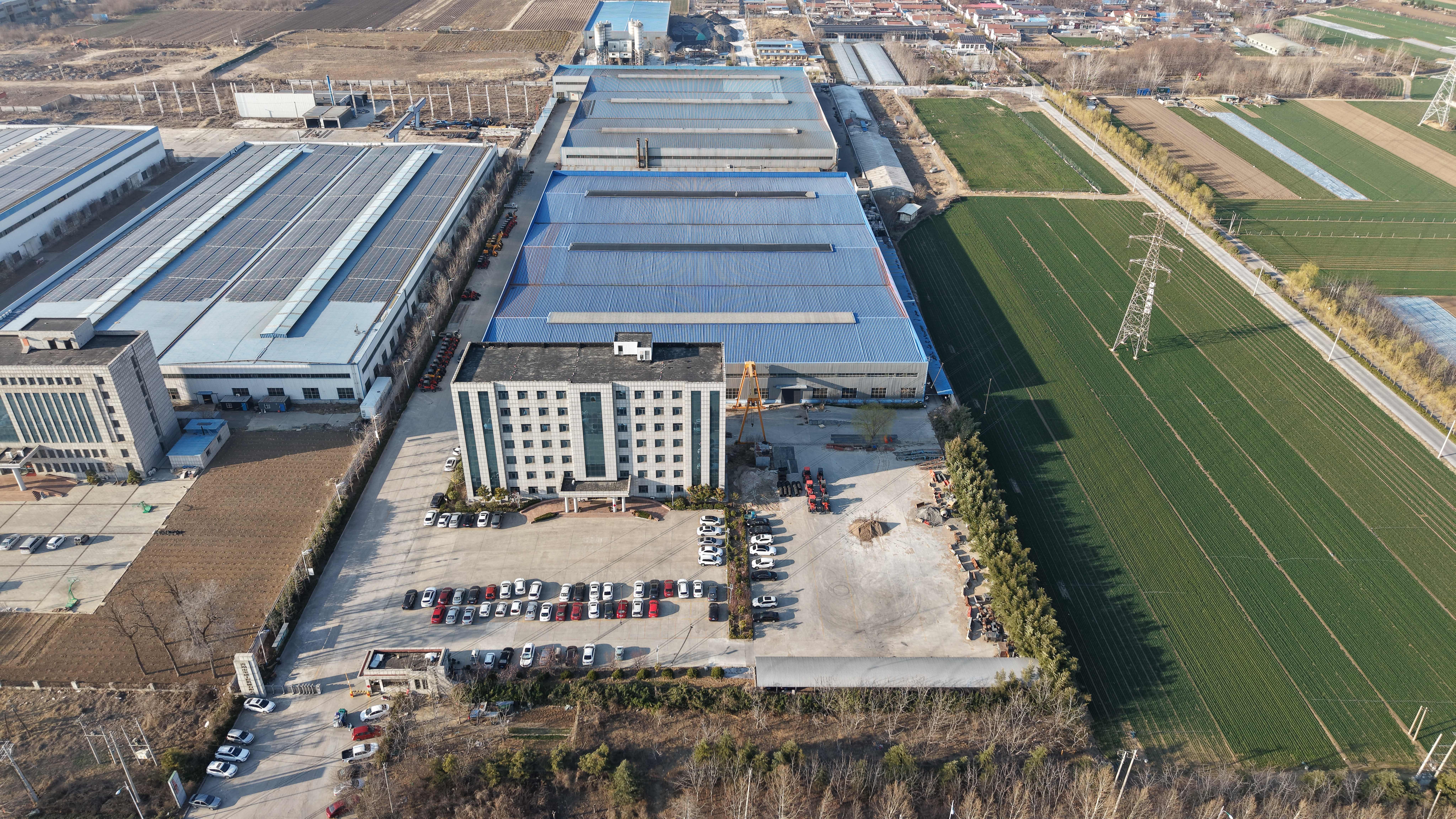
EVERUN production facility
Download the EVERUN product brochure to review wheel loader, telehandler, and excavator models.
Have Questions or Need More Details?
Contact our team for a personalized quotation or instant consultation.
Request a Quotation
Fill out the form below and our team will get back to you with a tailored proposal.
WhatsApp Direct Chat
Prefer to chat in real-time? Message us on WhatsApp for instant assistance & quick answers.
- Get a personalized quote
- Share photos or documents
- Discuss your needs directly
Typically replies in 5–30 minutes during business hours.