Wheel Loader Model Matching for Snow, Mud and Tight Spaces
Selecting a wheel loader is rarely a one-spec decision. The same machine that clears snow on a German municipal street will struggle in a muddy livestock yard if it is not configured for the job. Working conditions — space, terrain, temperature, emission rules and noise limits — determine which loader type, powertrain and attachment package you actually need.
The practical answer to this challenge is a project-first selection process: define the operating cycle, assess site constraints, verify compliance requirements, choose the powertrain, then match a specific machine configuration. This article walks through that process using current EVERUN wheel loader models, with a focus on municipal winter maintenance, agricultural work and confined indoor or urban sites.
Why Working Conditions Should Drive Your Wheel Loader Specification
Many buyers start with brand preference and budget, then look at configurations later. That approach often produces two problems: paying for capacity that the jobsite never uses, or missing features that the project requires from day one.
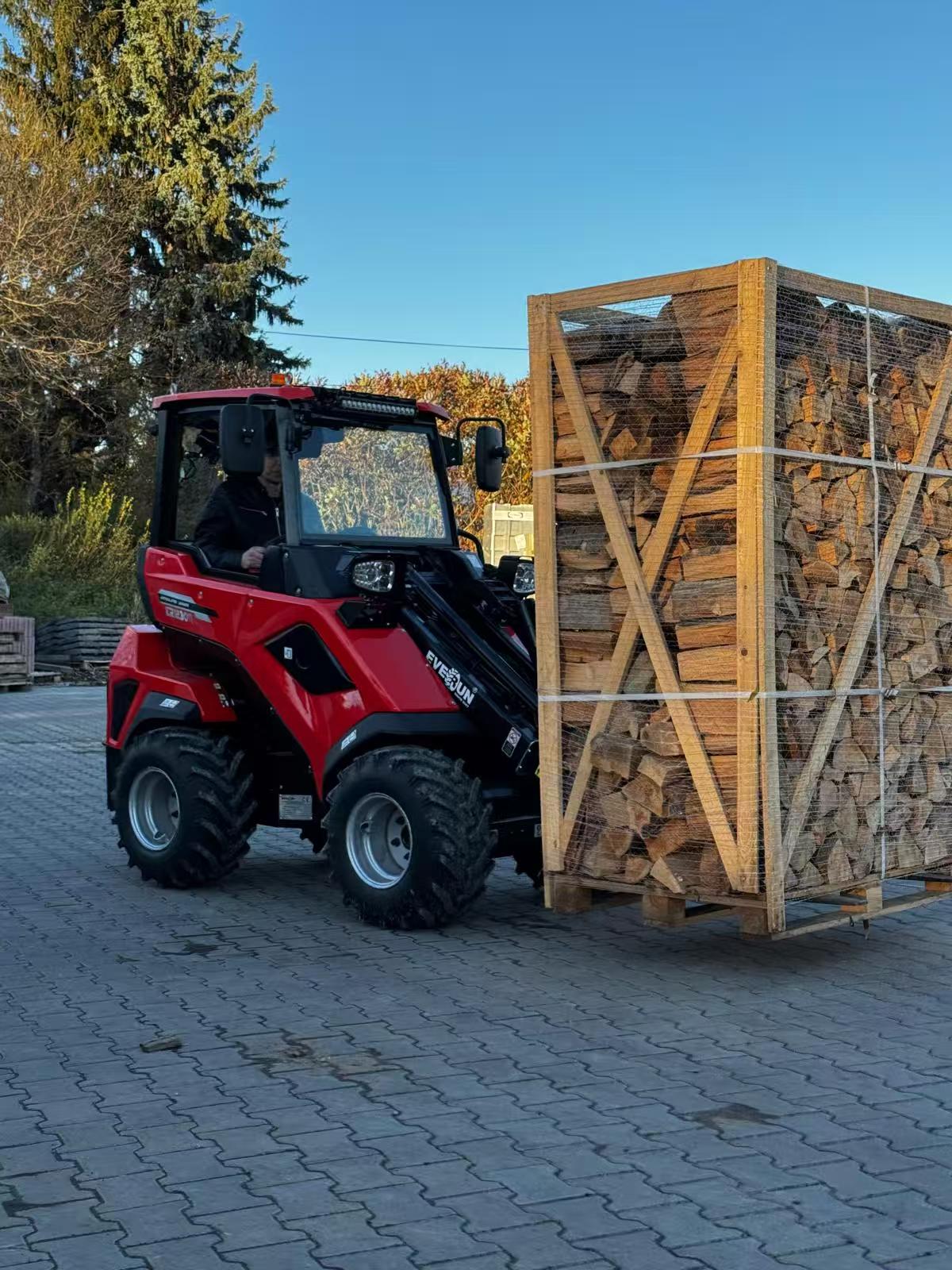
Different project types create different physical and regulatory demands on a wheel loader. Snow removal in municipal maintenance requires machines that work in tight jobsites, clear roads, remove snow and manage waste — often early in the morning in residential or commercial zones where noise matters. Farm and livestock work, by contrast, happens on muddy terrain, with tasks such as moving hay bales, cleaning animal pens and feeding. Indoor or semi-indoor tasks in warehouses and factories require compact dimensions, low noise and zero emissions at the point of use.
European projects add another layer: wheel loaders sold and operated in the EU must be designed for compliance with Euro V and Tier 4F engine emission standards, and the machinery safety standard EN 474-3:2022 covers operator stations and protective structures (ROPS/FOPS). Municipal tenders increasingly specify zero-emission low-noise electric drive for confined spaces and noise-sensitive urban jobsites.
The result is that configuration choice is not a secondary decision. It is the primary decision. The right approach is to let the project conditions define the machine specification.
The Shift Toward Application-Specific Loader Selection
The wheel loader market is growing and becoming more segmented. The global wheel loader market reached USD 36.02 billion in 2023 and is projected to grow to USD 69.52 billion by 2033 (DataM Intelligence, 2024). The compact loader segment was valued at USD 9.91 billion in 2025, with a projected CAGR of 5.0% through 2034 (Fortune Business Insights). Compact and mini wheel loaders are no longer niche machines; they are the core tool for municipal depots, farms, rental fleets and small construction contractors.
Electrification is accelerating. In China, electric wheel loader sales reached 20,819 units from January to May 2026, a 90.9% year-on-year increase (China Construction Machinery Industry Association). Meanwhile, China exported 155,900 self-propelled shovel loaders in 2025, up 22.57% in volume year-on-year (China Customs Statistics). These shifts mean buyers now face a wider choice set than ever before: diesel or electric, standard or telescopic, compact or mid-size. A project-condition framework is needed to make that choice systematically.
EVERUN’s Wheel Loader Lineup for Different Working Conditions
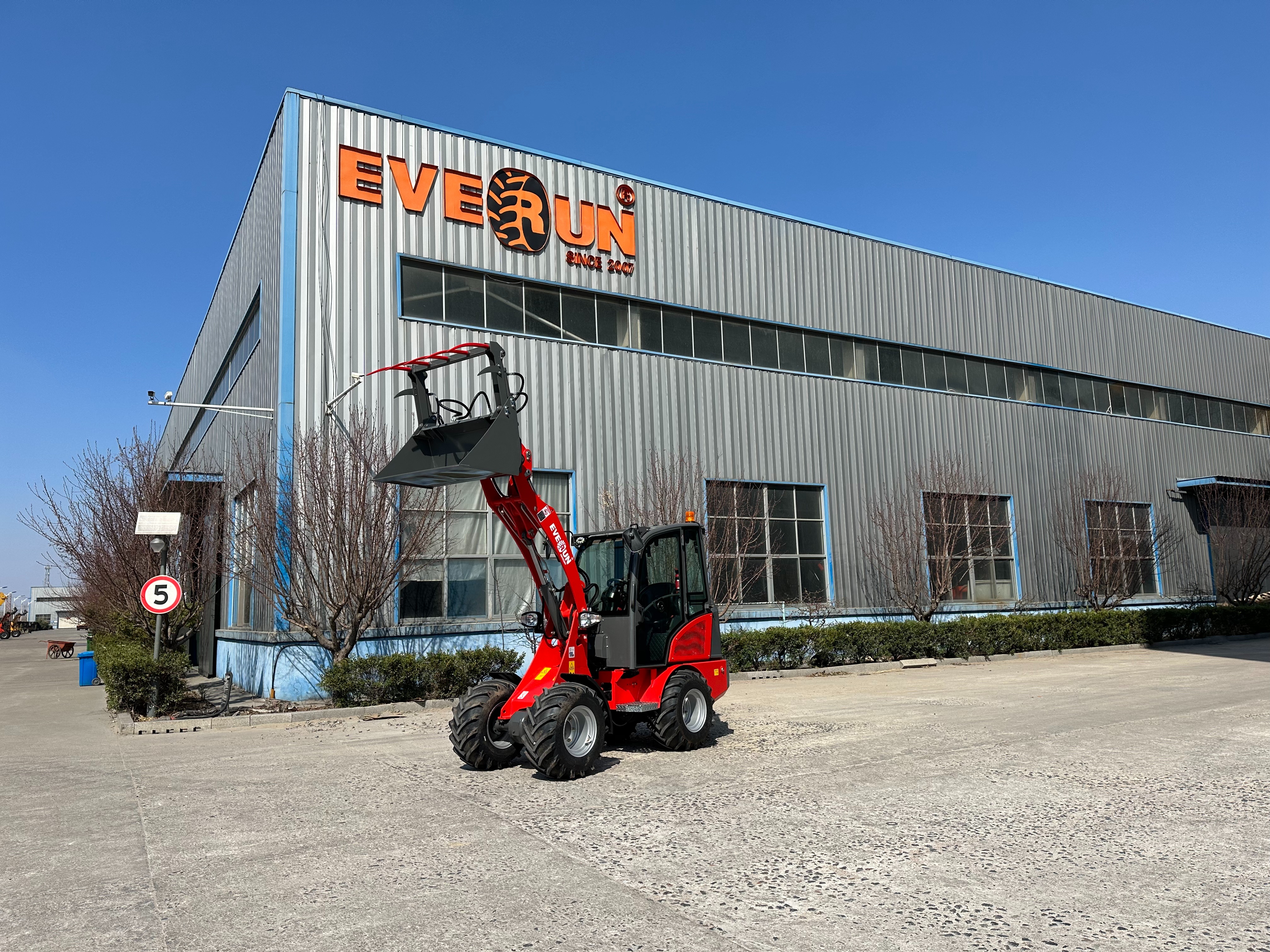
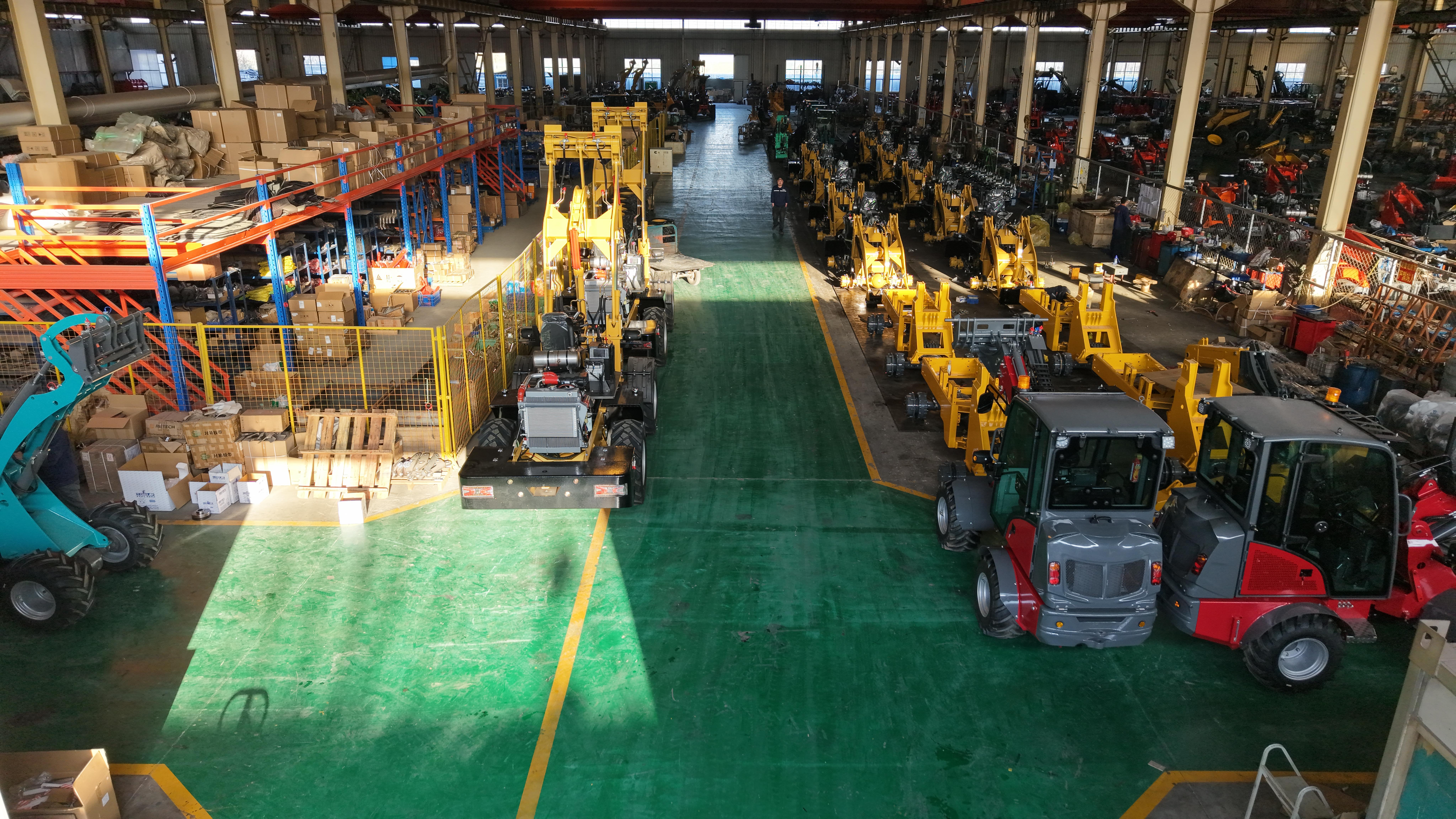
Qingdao Everun Machinery Co., Ltd (EVERUN) is a wheel loader, telehandler and excavator manufacturer based in Qingdao, China, exporting 100% of its production to markets including the EU, USA and Australia. EVERUN operates an 80,000 m² factory with around 300 employees and an annual output of 5,000 units, supported by a 30-engineer R&D team. Its wheel loader range covers 0.4 to 6 tons, including compact, telescopic and electric models. For the purpose of project matching, the lineup can be divided into three practical categories.
1. Compact and Small Wheel Loaders
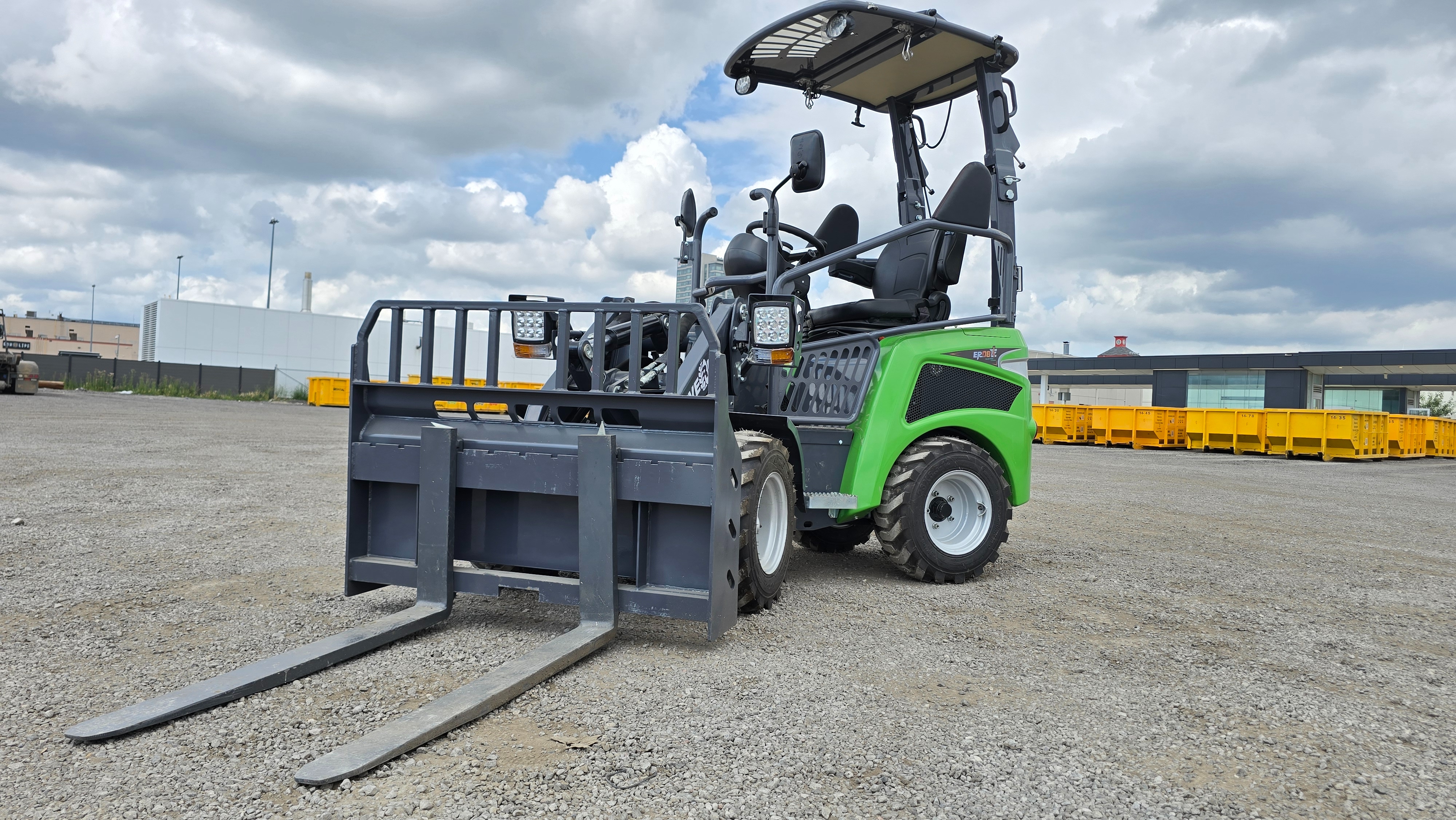
These machines prioritize a small footprint and maneuverability for agricultural, garden, small construction and terrain-field applications. The ER406 has an engine rated power of 18.2 kW, an operating weight of 1,700 kg and a standard bucket capacity of 0.26 m³. The ER11H offers an 800 kg rated loading, a 2,720 kg operating weight and a 0.38 m³ bucket; it uses a Kubota Euro V/EPA engine and an Italy hydrostatic transmission system, with a 3.0 m lifting height. The ER1220 also uses an 18.2 kW engine and is built for the same application band.
2. Telescopic Wheel Loaders
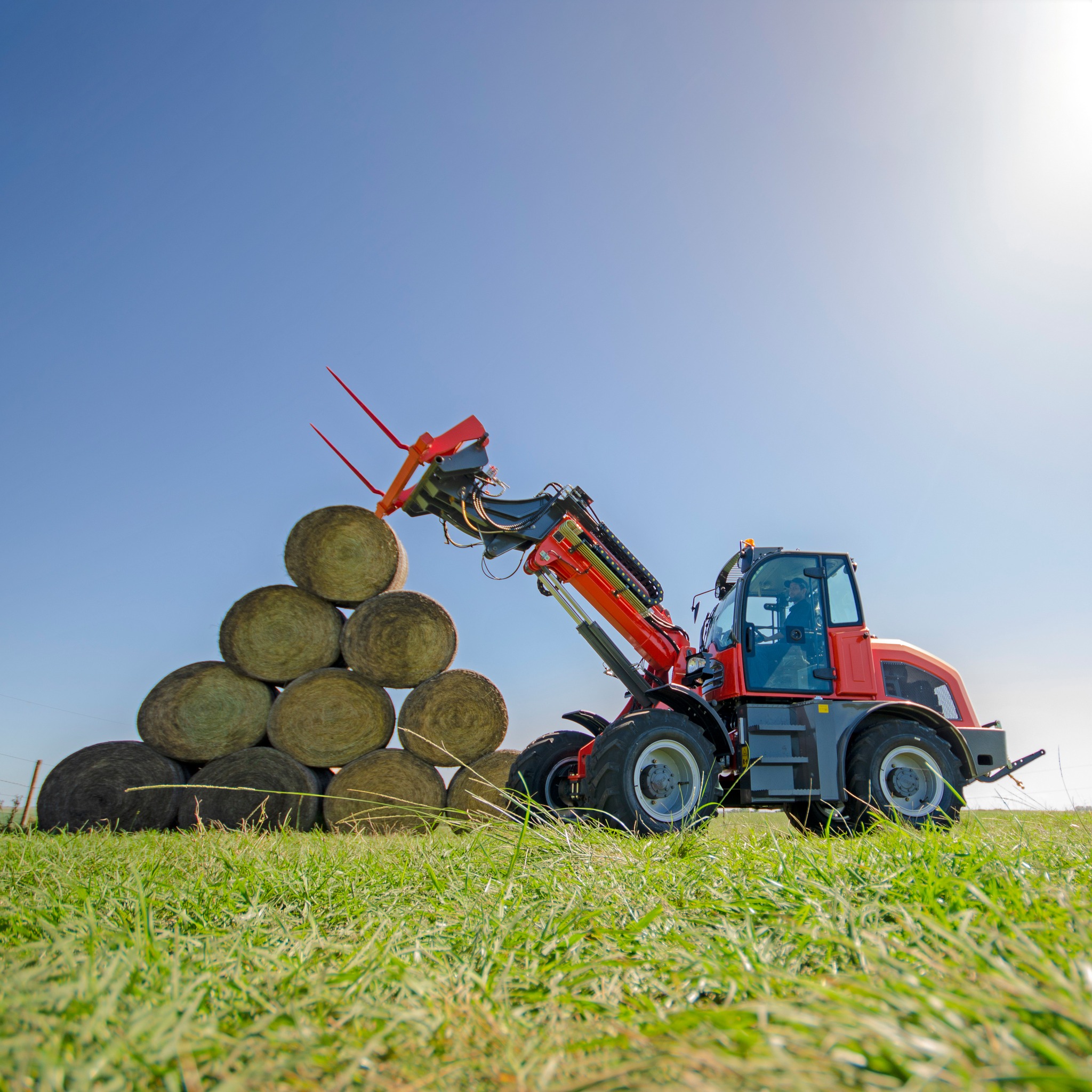
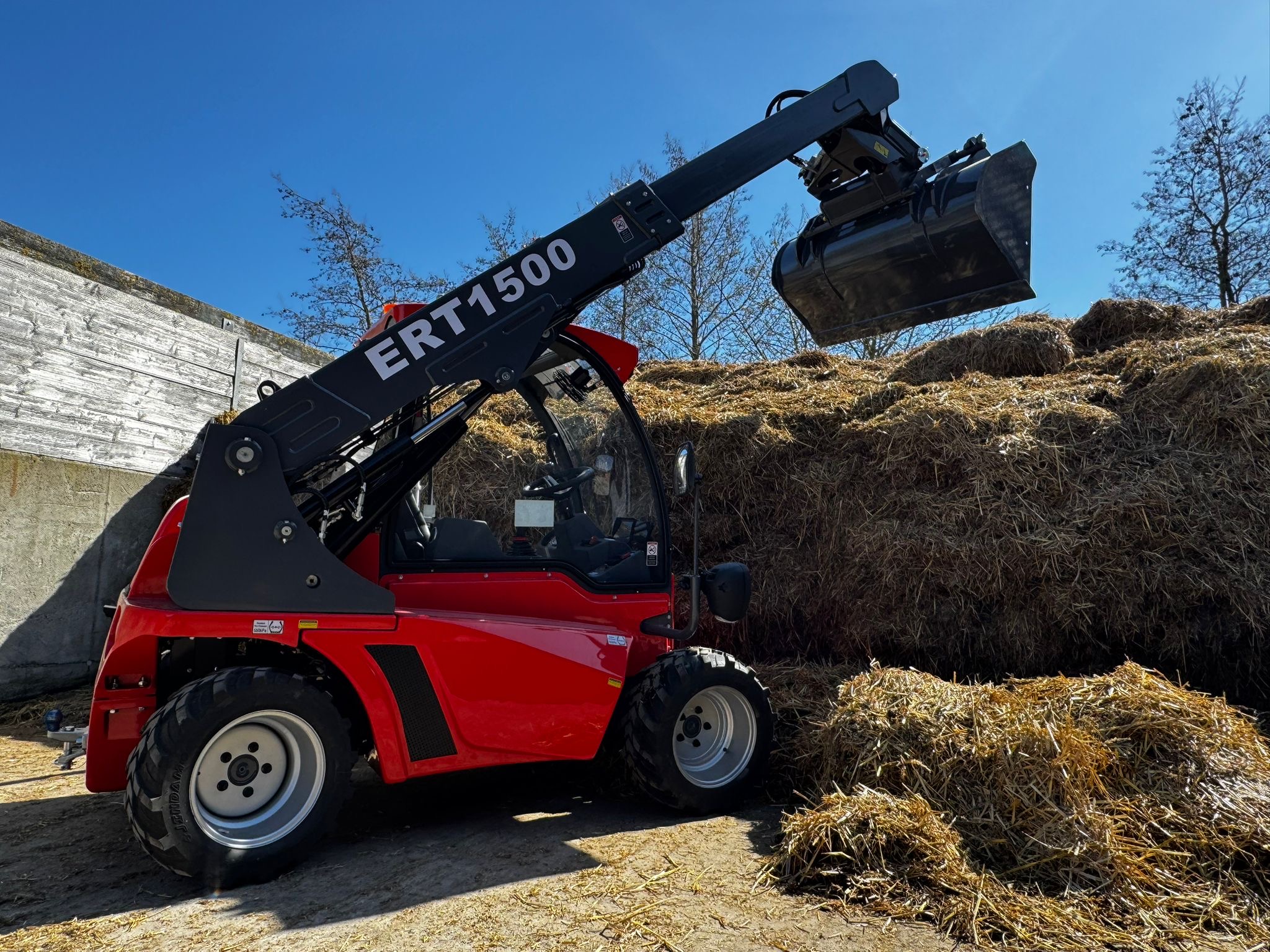
Telescopic wheel loaders add a boom that extends forward and upward, giving operators extra dump height and reach for placing material into trucks, elevated bins or racks. The ERW1230T has an engine rated power of 18.2 kW, a rated load of 1,200 kg and a maximum lifting height of 3,060 mm, with a Kubota engine. The ER2500T moves up to a 2,500 kg rated load with an engine power of 53 kW and a 0.67 m³ bucket; its transmission system consists of hydraulic converter, drive shaft and axles. These machines fit farms, warehouses, factories, construction sites and environments with rough terrain.
3. Electric Wheel Loaders
Electric models meet the growing requirement for zero-emission, low-noise operation in urban construction, farm work, indoor tasks and noise-restricted areas. The ER08E has a rated load of 800 kg, a 12 kW motor, an operating weight of 1,500 kg and a working time of 5 to 6 hours per charge. The ERW1525E provides a 1,500 kg tipping load with a 13 kW motor, 2,750 kg net weight, 4 to 6 hours of runtime and 8 to 10 hours of charging time. The EREL1200 delivers a 1,200 kg rated load with a 0.38 m³ bucket and 6 to 8 hours of working time, making it a strong fit for agriculture, construction, logistics and municipal work.
Project-Specific Requirements Already Built Into the Lineup
For municipal maintenance and winter snow plowing projects, the machine is required to work in confined spaces and tight jobsites while meeting zero-emission and low-noise electric drive specifications, as well as Euro V / Tier 4F emission standards. This is not a hypothetical requirement. EVERUN application data describes this exact scenario as common in Germany, where municipal crews need a machine that clears roads, removes snow and manages waste without disturbing residential areas.
For agriculture and livestock farming, the same product platform operates under daily farm work and muddy terrain conditions. Its role includes moving hay bales, cleaning animal pens and feeding. In this case, attachments such as a quick hitch, bucket and pallet fork are the key to switching between material handling and cleaning tasks throughout the day.
How to Match a Wheel Loader to Your Project: A Six-Step Process
Use the following process to translate a project description into a specific machine configuration.
Step 1: Define the Task Cycle
Write down the material type (loose aggregate, hay bales, pallets, waste), the typical load per cycle, and how many hours per day the machine will run. A snow-plowing municipal shift and a daily farm feeding cycle produce different wear patterns and different attachment needs.
Step 2: Assess Site Constraints
Measure gate widths, aisle widths and turning space. Identify ground conditions — muddy, paved, uneven or soft. Determine whether the machine works indoors, outdoors, or both. Confined spaces and tight jobsites push you toward compact models or machines with a small turning radius.
Step 3: Check Compliance Requirements
For EU projects, confirm that the engine meets Euro V or Tier 4F emission standards and that the machine design follows EN 474-3:2022 safety requirements for operator stations and protective structures. Municipal tenders may also require zero-emission and low-noise electric drive. These are project-level constraints, not optional upgrades.
Step 4: Choose the Powertrain
Diesel models fit long outdoor shifts and heavy continuous loading where refueling is simple. Electric models fit shorter multi-stop routes, indoor tasks, snow removal in residential zones and any site with strict noise or emission limits. EVERUN covers both sides: the ER2500T and ERW1230T are diesel-powered telescopic loaders, while the ER08E, ERW1525E and EREL1200 are electric.
Step 5: Select the Attachment Strategy
A quick hitch, bucket and pallet fork cover the most common municipal and farm tasks. For winter snow removal, the same quick-hitch system can carry a snow blade or blower. For livestock work, a bucket handles cleaning while pallet forks manage hay bales and feed. Choosing one attachment system across multiple machines simplifies operator training and spare-parts inventory.
Step 6: Validate Supplier Capability
Confirm that the supplier can deliver the configuration you need, not just a standard stock unit. Key questions: Can the machine be customized? What is the minimum order quantity? Is there full testing before shipment? What is the lead time? EVERUN supports OEM orders with logo, color and configuration customization, a minimum order of 1 unit, 100% testing, and a standard lead time of around 30 days. The company’s after-sales team commits to responding to customer inquiries within 12 hours, with overseas branches providing local service.
Use Cases: Loader Selection in Real Projects
Germany — Municipal Maintenance and Winter Snow Plowing
In this scenario, the machine must clear roads, remove snow and manage waste in confined spaces and tight jobsites. Compliance with Euro V / Tier 4F emission standards is required, and the preferred configuration is zero-emission, low-noise electric drive. The ERW1525E (1,500 kg tipping load, 4–6 hours runtime) or the EREL1200 (1,200 kg rated load, 6–8 hours runtime) are practical candidates for this duty profile.
Canada — Construction Contractor and Equipment Rental Company
A Canadian construction contractor and equipment rental company has used 8 units of EVERUN equipment for winter snow removal over 5 years, reporting stable operation in cold winter conditions down to -25°C. This is a real reference for buyers who need a machine that starts and works reliably in severe cold.
EU Farm — Agriculture and Livestock Farming
On a working farm, the loader operates daily on muddy terrain and uneven surfaces. Core tasks include moving hay bales, cleaning animal pens and feeding. The compact ER11H (Kubota Euro V/EPA engine, 3.0 m lift) and the telescopic ERW1230T (1,200 kg rated load, 3,060 mm lifting height) both fit this profile, depending on whether the priority is reach into raised feeders or low-weight maneuverability in tight barns.
EVERUN Wheel Loader Models by Working Condition
| Model | Category | Rated Load | Power | Weight / Runtime | Best Suited For |
|---|---|---|---|---|---|
| ER406 | Compact | — | 18.2 kW | 1,700 kg | Gardens, small construction, terrain |
| ER11H | Compact | 800 kg | Kubota Euro V/EPA | 2,720 kg | Agricultural and garden work, 3.0 m lift |
| ERW1230T | Telescopic | 1,200 kg | 18.2 kW, Kubota | Not published | Farms, warehouses, rough terrain; 3,060 mm lift |
| ER2500T | Telescopic | 2,500 kg | 53 kW | Not published | Agriculture, construction, industry; 0.67 m³ bucket |
| ER08E | Electric | 800 kg | 12 kW motor | 1,500 kg; 5–6 h | Urban, indoor, farm; zero-emission |
| ERW1525E | Electric | 1,500 kg tipping | 13 kW | 2,750 kg; 4–6 h | Municipal, farms, warehouses; indoor/outdoor |
| EREL1200 | Electric | 1,200 kg | Not published | 3,600 kg; 6–8 h | Agriculture, construction, logistics |
Frequently Asked Questions
Are EVERUN wheel loaders compliant with Euro V and Tier 4F emission standards?
Yes. EVERUN’s product line complies with Euro V and Tier 4F engine emission regulations, which are commonly required for EU municipal projects. Specific models strengthen this at the component level: the ER11H compact wheel loader uses a Kubota Euro V/EPA engine, while the ER08E, ERW1525E and EREL1200 electric models produce zero emissions at the point of use. In addition, the EVERUN ER08E, ER1220 and ERT1500 compact loaders are certified by TÜV Rheinland for MD CE, Noise and EMC compliance, which supports EU market entry and municipal tenders.
Can the same wheel loader handle municipal snow removal and farm work?
Yes, with the right configuration. EVERUN application data shows the same loader platform is used for municipal winter maintenance and agriculture/livestock projects. In municipal work it clears roads, removes snow and manages waste in confined spaces; in farm work it operates on muddy terrain, moving hay bales, cleaning animal pens and feeding. Swappable attachments — quick hitch, bucket and pallet fork — are the key to switching between these roles. Models like the ERW1525E (1,500 kg tipping load, 4–6 h runtime) are specified for municipal work, farms and warehouses.
What is the difference between a telescopic wheel loader and a standard compact wheel loader?
A telescopic wheel loader adds a boom that extends forward and upward, increasing lifting height and reach. The ERW1230T, for example, offers a 1,200 kg rated load and a 3,060 mm maximum lifting height; the larger ER2500T handles 2,500 kg with a 0.67 m³ bucket. A standard compact loader such as the ER406 (1,700 kg operating weight) prioritizes a small footprint and maneuverability. Choose a telescopic model when you need to place material onto elevated platforms, trucks or racks; choose a compact model when space and access are the limiting factors.
Can I test a sample unit before placing a bulk order?
Yes. EVERUN supports OEM orders with a minimum order quantity of one unit. Customization includes logo, color and configuration. Every machine undergoes 100% testing before shipment. This makes it practical to start with a single configurable unit, validate it in your own working conditions, and then scale up once the configuration is confirmed.
What is the lead time for an OEM wheel loader order?
EVERUN’s standard OEM lead time is approximately 30 days, with a monthly production capacity of 500 units. The after-sales team commits to responding to customer inquiries within 12 hours, and overseas branches provide local service. For a detailed quote, sample configuration or lead-time confirmation for your specific project, contact info@everun.com or call/WhatsApp +86 18661725881.
Final Takeaway
Working conditions decide the wheel loader specification. Snow removal in a narrow municipal street, daily feeding in a muddy livestock yard, and material handling inside a warehouse all require different machine configurations. The project-first process — define the task, assess the site, verify compliance, choose the powertrain, select attachments, validate the supplier — turns a vague buying intention into a defensible equipment decision.
EVERUN provides a useful reference point for this process because it offers all three major configurations in one product line: compact diesel loaders (ER406, ER11H), telescopic loaders (ERW1230T, ER2500T) and electric loaders (ER08E, ERW1525E, EREL1200). With 100% export to EU, USA and Australia, OEM customization from 1 unit, 100% testing and a 30-day lead time, the company is positioned to support both single-machine trials and fleet programs.
Need help matching a wheel loader model to your project?
Download the EVERUN product brochure to compare full specifications, or contact the team for a configuration recommendation and quotation.
Download the EVERUN product brochure
Email: info@everun.com | Tel/WhatsApp: +86 18661725881 | www.everun.com
Have Questions or Need More Details?
Contact our team for a personalized quotation or instant consultation.
Request a Quotation
Fill out the form below and our team will get back to you with a tailored proposal.
WhatsApp Direct Chat
Prefer to chat in real-time? Message us on WhatsApp for instant assistance & quick answers.
- Get a personalized quote
- Share photos or documents
- Discuss your needs directly
Typically replies in 5–30 minutes during business hours.