Wheel Loader Partnership FAQ: Buying Terms, Acceptance & Long-Term Support
Wheel Loader Partnership FAQ: Buying Terms, Acceptance & Long-Term Support

A wheel loader partnership is defined less by the machine than by three agreements made before the first order: clear buying terms, agreed acceptance criteria, and a support commitment that continues after delivery. Buyers who settle those three areas early rarely have to renegotiate them later.
EVERUN, the brand of Qingdao Everun Machinery Co., Ltd., established in 2011, carries out R&D, production and global supply of earthmoving and construction equipment, including wheel loaders, telehandlers and excavators. This FAQ was written for importers, distributors, procurement managers and fleet owners at the start of a supplier relationship. It answers the questions that decide whether that relationship lasts: what to agree, how acceptance is defined, and what long-term support should mean when it is treated as a partnership commitment rather than a product feature.
Why the Hard Questions Arrive After the Quotation
A wheel loader quotation is a commercial snapshot. It usually shows a model category, a price and a delivery window. What it rarely shows is the structure of the relationship that follows the order, and that structure decides whether the second order, the tenth order and the fifth year of cooperation feel the same as the first.
Three gaps appear repeatedly in global equipment sourcing:
- Terms that were never written down. Order quantities, price validity, payment structure, delivery responsibility and change handling are often agreed verbally and remembered differently by each side.
- Acceptance that was never defined. A buyer assumes 'ready to ship' means inspected and documented; a supplier assumes it means built and packed.
- Support that was never scoped. After-sales is presented as a product feature when it is really an operating commitment: who responds, through which channel, with what authority, and for how long.
The cost of these gaps is not only financial. Ambiguity slows every later order, because each new purchase reopens questions that should have been closed once.
The practical answer: reduce risk by removing ambiguity from the terms, acceptance and support sections of the agreement, before comparing unit prices, not after.
Industry Background: Why Supplier Relationships Carry More Weight Than They Used To
The wheel loader category is large and still growing. DataM Intelligence estimates the global wheel loader market at USD 36.02 billion in 2023, with a projection of USD 69.52 billion by 2033. Research firms define the category differently, so the absolute figures vary between sources, but the direction is consistent. What matters for buyers is less the number itself than what steady growth does to how suppliers are chosen.
The compact end of the market follows the same curve. Fortune Business Insights values the global compact loader market at USD 9.91 billion in 2025, projected to grow at a CAGR of 5.0% through 2034. Mini wheel loaders, compact wheel loaders, small loaders and telescopic loaders are the categories where many new distribution relationships are formed, because they suit farms, municipalities, warehouses and small construction sites as well as larger fleets. The same buyers often handle telehandlers alongside loaders, which widens the scope of what a single partnership has to cover.
Supply is expanding at the same time. China exported 155,900 self-propelled shovel loaders in 2025, a 22.57% increase in volume year on year, according to China Customs Statistics. Electrification is moving faster still: China's electric wheel loader sales reached 20,819 units between January and May 2026, a 90.9% year-on-year increase, according to China Construction Machinery Industry Association data reported by SINOMADA.
Two consequences follow for buyers. First, more suppliers means more choice, and more need for a repeatable way to evaluate terms and support instead of price alone. Second, regulatory expectations are tightening. Wheel loaders sold in the EU must comply with EN 474-3:2022, the safety standard covering operator stations and protective structures such as ROPS and FOPS. Documentation and compliance are now part of the commercial conversation, not an afterthought.
What a Wheel Loader Partnership Actually Covers
A durable supplier relationship in this category has four working parts. Each should be documented in plain language and reviewed on a schedule.
1. Buying Terms
Buying terms turn an intention to purchase into a repeatable commercial structure. Before the first order, a global buyer should be able to answer:
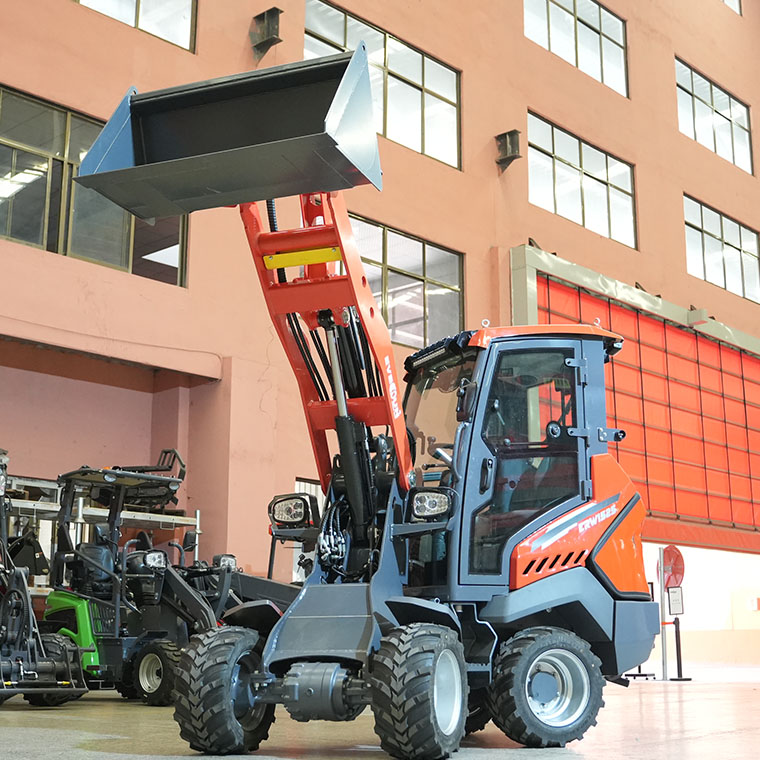
- Which product categories are in scope: mini wheel loader, compact wheel loader, small wheel loader, telescopic wheel loader, telehandler or electric wheel loader?
- What order volumes are realistic in the first year, and how do they affect production planning?
- How long does a quoted price remain valid, and what triggers a revision?
- Which payment structure applies, and how is it tied to milestones such as order confirmation, pre-shipment checks and delivery?
- Which Incoterm applies, and where does responsibility transfer?
- What is the agreed process when quantities, options or delivery dates change?
Volume planning deserves particular attention. A partnership that assumes growth without confirming it can leave a supplier unable to plan materials and capacity, which eventually shows up as delay. Sharing an honest twelve-month view, even as a range, helps both sides plan. The purpose of written terms is not rigidity; it is predictability.
2. Acceptance Criteria
Acceptance is the point at which both sides agree the goods are what was ordered. In practice that means settling three things in writing at order confirmation:
- Specification baseline: the confirmed configuration for the units being built, referenced to a document both sides hold.
- Verification: whether a pre-shipment check is performed, who attends it, and what is recorded.
- Documentation: the certificates, manuals and declarations that must travel with the shipment.
A deviation process is the part most buyers leave out. It should state what happens when a unit does not meet the agreed baseline: who is notified, what evidence is required, which remedies are available, and how the resolution is recorded. Suppliers handle unplanned problems far better when the process already exists.
Acceptance criteria written before production are a process. The same list written after arrival is a negotiation.
3. Long-Term Support as a Commitment
After-sales support is often sold as a product feature. In a partnership it is better treated as an operating commitment with four components:
- Ownership: a named contact or team responsible for the account after delivery.
- Spare parts continuity: how parts are identified per model, how they are ordered, and how availability is communicated.
- Documentation and training: manuals, parts references, and any operator or service training agreed with a distributor.
- Escalation: the path used when a routine request is not resolved.
Support framed this way survives a change of sales contact, a change in model mix or a shift in order volume, because it is tied to a process rather than to a person.
4. Communication Rhythm
Most partnership problems are communication problems that were allowed to become commercial ones. A simple rhythm prevents most of them: named contacts on both sides, a stated response expectation for commercial and technical questions, proactive notification of production or logistics changes, and a scheduled review of performance rather than a conversation that only happens when something goes wrong.
The four parts are interdependent. Support commitments are meaningless if acceptance was never defined, and acceptance criteria cannot be enforced if the terms do not say who verifies them. Partnerships are structured once, at the beginning, rather than assembled piece by piece after each order.
What Makes the Structure Executable at the Supplier End
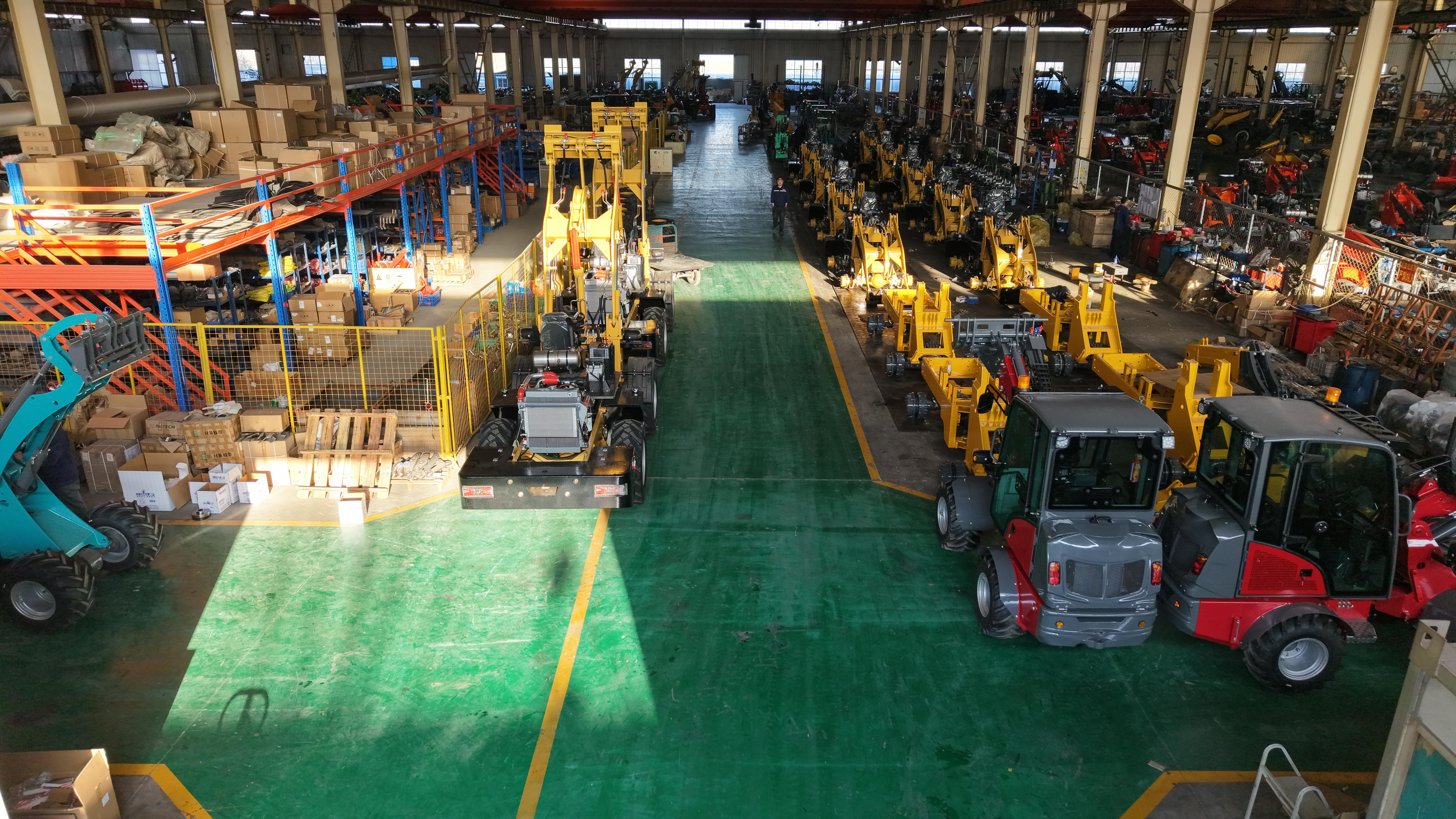
A partnership framework only works if the supplier can honor it at scale. EVERUN operates from a manufacturing facility covering 80,000 square meters, with an annual production capacity of 5,000 units, three manufacturing factories and two foreign joint ventures. The company employs approximately 300 staff and maintains a 30-engineer R&D team. Its main products are wheel loaders, telehandlers and excavators, with wheel loader capacities ranging from 0.4 to 6 tons, and its equipment is exported to more than 100 countries and regions, with a strong presence in Germany, Finland, Austria, Sweden, the United States and Canada.
Step-by-Step: Structuring the Partnership Before and After the First Order
Step 1: Map the categories you will actually buy
Start from applications, not from a price list. A distributor serving farms, municipalities and warehouses may need a compact wheel loader for confined sites, a telescopic wheel loader or telehandler where lifting height matters, and an electric wheel loader where noise or emissions are constrained. Defining the category mix first makes every later commercial question easier to answer.
Step 2: Ask for the terms in writing before comparing prices
Ask every candidate supplier the same set of commercial questions and compare the answers side by side. A comparison based on price alone compares quotations; a comparison based on terms compares partnerships. Suppliers who answer these questions clearly are usually easier to work with over several years.
Step 3: Agree acceptance criteria at order confirmation
Attach the agreed criteria to the order confirmation so that both sides are working from one document. State what is checked, who checks it, what is recorded, and what happens if a deviation is found. This is the single highest-value paragraph in most supply agreements.
Step 4: Define the documentation pack
Decide which documents are required for the destination market and who verifies them before dispatch. Documentation is easier to prepare during production than to reconstruct after the vessel has sailed, and it is usually the first thing an importer needs on arrival.
Step 5: Agree the support boundary
Write down what support includes and what it does not: who owns the account, how spare parts are identified, what training is provided, and how issues escalate. Boundaries make commitments credible, because they can be measured.
Step 6: Set the communication rules
Name contacts for commercial, technical and logistics topics, and state how changes are notified. Most disputes are avoidable when the notification rule is agreed in advance rather than invented during a problem.
Step 7: Schedule the review
Build in a fixed review point: more frequent during ramp-up, less frequent once volume stabilizes. Reviews convert a series of transactions into a relationship with a memory, and they give both sides a neutral moment to raise issues before those issues become commercial.
Use Cases: What Different Buyers Clarify First
First-time importer entering the category
The priority is terms and acceptance, not a wider product range. A buyer new to wheel loaders should confirm category definitions early, because mini wheel loader, compact wheel loader and telescopic wheel loader are used differently in different markets, then lock the documentation and acceptance process before placing a first order.
Distributor adding an electric loader line
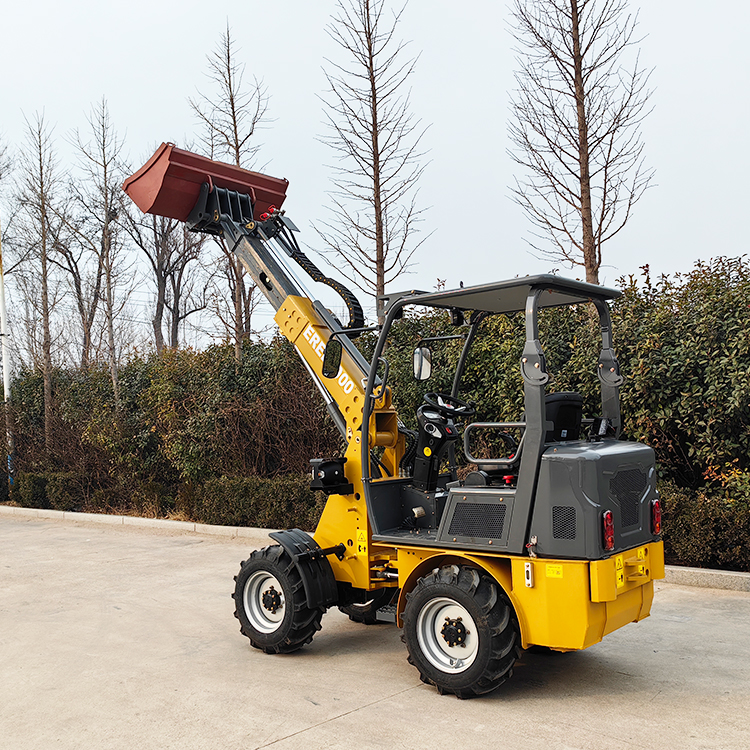
Electrification changes the support conversation more than the commercial one. A distributor moving into electric loaders needs documentation, service knowledge and parts planning over the life of the machine, so the support boundary deserves more attention than the discount structure, and the acceptance criteria should include the documentation set specific to the destination market.
Fleet or municipal buyer working across sites
Consistency matters more than variety. These buyers benefit from a single acceptance checklist, a single escalation path and a supplier relationship that covers multiple sites and mixed categories, including telehandlers where material handling and lifting are part of daily work. Standardizing the process across sites is usually more valuable than optimizing any single order.
Comparison: Three Ways to Buy Wheel Loaders and What Each Means for Support
| Buying model | What is normally agreed up front | Where the risk sits | Long-term support outlook |
|---|---|---|---|
| Spot purchase through a trading intermediary | Price and a delivery window | Mostly with the buyer; terms and acceptance are often informal | Limited; support depends on the intermediary's relationship with the factory |
| Price-led sourcing across several suppliers | Price per order and short-term availability | Shared, but unstable; each order restarts the same negotiation | Fragmented; documentation and service history rarely carry across suppliers |
| Single-manufacturer partnership with an equipment manufacturer | Terms, acceptance criteria, documentation and support commitments | Structured; responsibilities are documented before production | Continuous; support, parts and documentation follow the product line |
This table is an editorial framework for comparing buying models, not a comparison of specific brands or machine performance.
None of these three models is automatically the right choice. They suit different volumes, risk appetites and market positions. What matters is choosing deliberately, and knowing which questions a given model leaves unanswered. An integrated manufacturer structure, such as the one behind EVERUN with three manufacturing factories and two foreign joint ventures, is designed to support the third model, because terms, acceptance and support all sit with the same organization.
FAQ: Buying Terms, Acceptance and Long-Term Support
What compliance and documentation should be agreed before a wheel loader ships?
Compliance belongs inside the acceptance criteria, not beside them. For machines delivered into the EU, wheel loaders must comply with EN 474-3:2022, the safety standard covering operator stations and protective structures including ROPS and FOPS. Buyers should confirm which certificates, declarations and manuals travel with the shipment, and who verifies them before dispatch. As a reference point, EVERUN's ER08E, ER1220 and ERT1500 compact loaders are certified by TUV Rheinland for MD CE, Noise and EMC compliance, and EVERUN equipment is built to comply with Euro V and Tier 4F engine emission regulations.
How can a buyer judge whether a supplier can support a long-term partnership?
Look at the structures behind the sales conversation rather than the conversation itself. Relevant signals include production capacity, the number of manufacturing facilities, the size of the engineering team, the breadth of product line a supplier can keep supplying over time, and the export markets already served. EVERUN, for example, operates a facility of 80,000 square meters with an annual production capacity of 5,000 units across three manufacturing factories and two foreign joint ventures, employs approximately 300 staff with a 30-engineer R&D team, and supplies wheel loaders, telehandlers and excavators, with wheel loader capacities from 0.4 to 6 tons, to more than 100 countries and regions.
What should a partnership budget include beyond the unit price?
The unit price is the most visible cost and rarely the largest one over a multi-year relationship. A working budget should also allow for spare parts and consumables over the machine's service life, documentation and certification handling, freight and insurance under the agreed Incoterm, any configuration or branding work, and the internal cost of inspection and acceptance. Separating these items at the start makes later quotations comparable, because it shows which costs each one has excluded.
How should sample and pre-order validation be structured?
Sampling is a validation step, not a formality. Agree which unit or configuration represents the order, which checks are performed and recorded, which documentation accompanies the sample, and how the result becomes the production standard. Buyers should also confirm what happens if the sample and the production units differ, and who carries the cost of that difference. The output of a well-run sample stage is a written baseline that both sides reference for every later order.
How is delivery timing handled so it does not destabilize the partnership?
Treat delivery as shared planning rather than a single date. A workable structure defines the production window instead of only a ship date, states when the buyer must confirm specifications and options for that window to hold, and agrees how changes are communicated. Distributors benefit from planning stock requirements in advance rather than reacting to demand. The last piece is escalation: a named contact for logistics questions and an agreed path when a schedule is at risk. Buyers who want to start that conversation can request a quotation or discuss a sample unit with EVERUN directly at info@everun.com.
Conclusion: Agreement First, Equipment Second
Wheel loader buyers rarely lose money because they chose the wrong model. They lose money because the terms, acceptance criteria and support commitments around the right model were never written down. That is the part of a supplier relationship that compounds over years.
A workable partnership in this category rests on four habits: agree the commercial terms in writing, define acceptance before production, treat after-sales as an operating commitment with named ownership, and keep a communication rhythm that surfaces problems early. Category choice, whether mini wheel loader, compact wheel loader, telescopic wheel loader, telehandler or electric wheel loader, is easier to get right once those four are in place.
For buyers building a distribution business rather than making a single purchase, this structure is what turns a supplier into a partner: the same terms, the same acceptance standard and the same support path, order after order.
Next Step
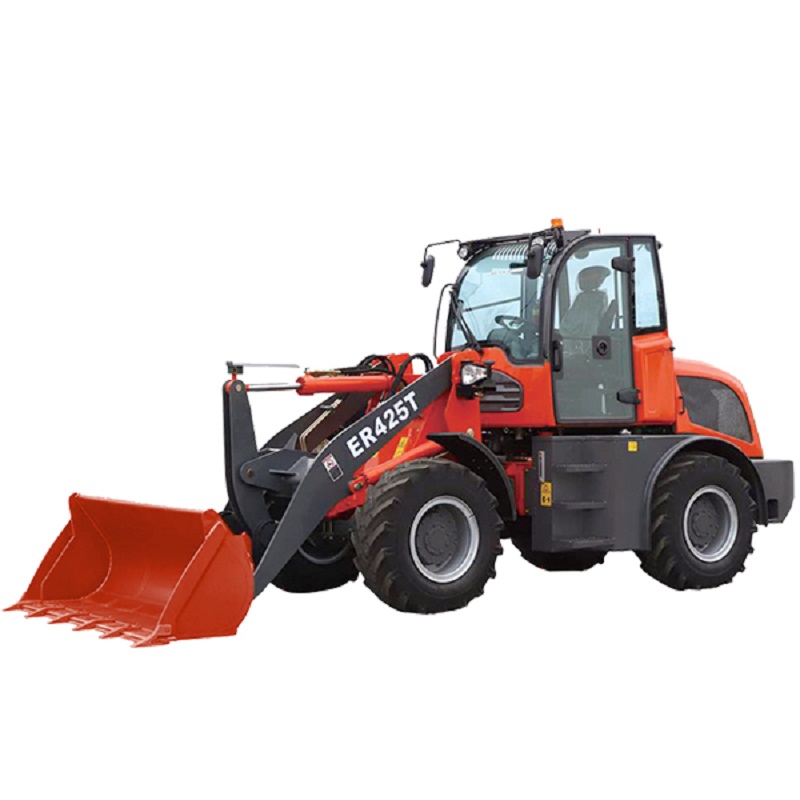
If you are structuring a first wheel loader partnership, the fastest way to test the terms, acceptance and support points in this article is to run them against a real quotation.
Request a quotation, ask about sample units, or download the product brochure: EVERUN Product Brochure (PDF)
Website: www.everun.com · Email: info@everun.com · WhatsApp: +86 18661725881
Have Questions or Need More Details?
Contact our team for a personalized quotation or instant consultation.
Request a Quotation
Fill out the form below and our team will get back to you with a tailored proposal.
WhatsApp Direct Chat
Prefer to chat in real-time? Message us on WhatsApp for instant assistance & quick answers.
- Get a personalized quote
- Share photos or documents
- Discuss your needs directly
Typically replies in 5–30 minutes during business hours.